Helsinki like a local: the city that lives inward
Silence is not cold: it is respect
One of the first things that strikes those who move to Helsinki is the Finnish relationship with silence. On the bus no one speaks loudly, at the stop no one makes conversation with strangers, in the supermarket queue a distance is maintained that elsewhere we would call a safety distance but which here is simply good manners. For those coming from Mediterranean or Southern European cultures this may seem like indifference, even hostility. But locals explain it differently: not disturbing someone you don't know is a form of respect, not closedness. Trust is earned over time, and when you earn it, it's as solid as granite.
The sauna is not a luxury: it is a cultural necessity
To understand Helsinki you must understand the sauna. Not in the tourist sense of the term, not as an attraction to check off a list, but as a deep social institution that has shaped Finnish culture for centuries. Locals don't go to the sauna to relax after a stressful week: they go because it is the place where hierarchies flatten out, conversations become honest, important decisions are made. There are organizations that still hold work meetings in the sauna today, and it is not considered odd.
The obsession with nature in the middle of the city
Helsinki is a small, compact capital, built on a peninsula that extends into the Baltic surrounded by islands. And its inhabitants have a relationship with nature that is not romantic in the literary sense of the term: it is practical, almost visceral. The waterfront is not a postcard scenery but a daily gymnasium. In summer you swim before work, in winter you walk on ice between the islands. The small islands in the sea are reached by public ferries and Finns go there with a picnic under their arm like elsewhere one takes the metro to go to a bar.
Design and functionality: beauty that is not seen
Helsinki is considered one of the world capitals of design, but locals would laugh at you if they heard you explain it that way. For them design is not a cultural label to display: it is simply the way things must work. A chair must be comfortable before it is beautiful. A building must meet the needs of those who inhabit it before impressing those who look at it. This philosophy, born in the twentieth century with great figures of Finnish architecture and craftsmanship, has become part of everyday thinking.
The darkness of winter and the light of summer: two cities in one
Those who know Helsinki only in summer don't really know it, and the same is true for those who only come in winter. They are almost two different cities. In summer the light never quite sets, the nights are white, people stay out late as if recovering months of darkness, parks fill with families and outdoor bars become the center of social life. There is a kind of collective euphoria, a physical gratitude for every hour of light.
Slowness as a form of intelligence
The thing that foreign residents take the longest to accept about Helsinki is the pace. It is not a city that drags you along, it doesn't have that frenetic current you feel in London or Milan. Things happen, but they happen calmly. Shops close early, weekends are sacred, vacations are taken seriously. At first this may seem like apathy, lack of ambition. Then you understand that it is a precise choice: free time is real time, not leftover time.
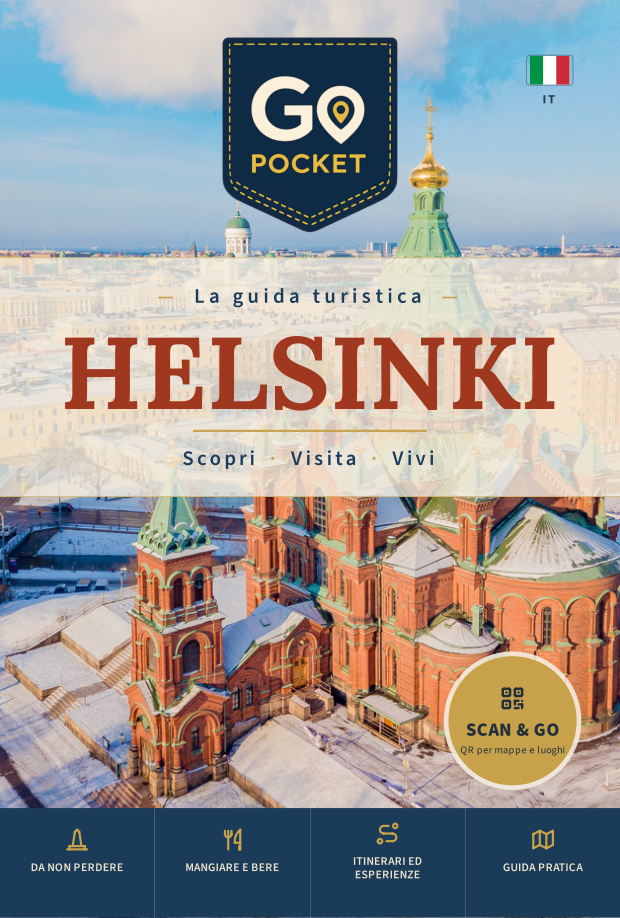
The guide to this city: Helsinki
Digital guide to Helsinki: what to see, where to eat, live maps and tips. Read it like an app, even offline.
Explore · € 4,99 →