Lisbon in 2026: why this city never stops surprising
A city built on water and memory
Lisbon's relationship with the sea is not decorative: it is existential. For centuries its caravels opened trade routes towards Africa, Asia and the Americas, transforming a small Iberian kingdom into the centre of one of the most vast empires in modern history. That period left extraordinary architectural traces — the florid Gothic of Manueline, a unique style that interweaves nautical motifs with white limestone — but it left above all an emotional imprint that the Portuguese call saudade. This word is difficult to translate: it is nostalgia, but also awareness of loss, a bittersweet feeling that permeates even music. Walking at night through certain alleys of Alfama and hearing a fado emerge from an open window is to understand, physically, what that word means.
Fado: not a performance, a confession
Fado is recognized by UNESCO as an intangible heritage of humanity, a recognition that has obviously brought with it a certain commercialization. But those who know where to look — and Lisbon still offers many authentic corners, far from the most beaten paths — can witness performances where music is not entertainment but something more similar to a public confession. The voice of the fado singer, supported by the Portuguese guitar with its metallic and sorrowful timbre, tells of ended loves, departures with no return, the harshness of the sea. It is a tradition born in the working-class quarters of the nineteenth century, grown among sailors and washerwomen, and still today capable of stopping time in a room.
The neighbourhoods: each hill is a different world
Lisbon is understood on foot, going up and down its cobblestones with the patience they deserve. Alfama is the oldest neighbourhood, with its labyrinthine structure of Moorish origin that managed to resist better than other areas the devastating earthquake of 1755 — one of the calamities that profoundly marked the face of the city. Belém, overlooking the Tagus estuary, preserves the monuments of the Age of Discovery and tells the story of a city that once projected itself towards unknown horizons. Mouraria, historic neighbourhood of the medieval Islamic community, is today a vibrant multicultural melting pot. And then there is Intendente, neighbourhood adjacent to Mouraria, and further LX Factory, an old industrial complex transformed into creative space: each corner has its own stratification, its own story to decipher.
A cuisine that doesn't need trends
Portuguese gastronomy has gone through a season of great international attention, with chefs reinterpreting tradition with contemporary technique. But the truth is that Lisbon has always had excellent cuisine, simply without making propaganda about it. Cod — the famous bacalhau — is said to have an extraordinary number of different recipes, and this popular exaggeration tells well how deeply rooted this ingredient is in national identity. Fresh fish, dense and substantial soups, sweets made from egg yolk and sugar with roots in medieval convent pastry-making: all of this makes up a coherent gastronomic tradition, poor in frills and rich in flavour.
The light, the azulejo and that sensation difficult to explain
Every traveller who returns from Lisbon mentions sooner or later the light. The geographical position, the proximity to the Atlantic, the white of the sun-parched facades: everything contributes to creating an illumination that painters have sought to capture for centuries without ever quite succeeding. Then there are the azulejos, the enamelled ceramic panels that cover churches, railway stations, palaces and courtyard walls. This tradition has Arab roots, was reworked in Portugal over the centuries and reached in some eras extraordinary narrative peaks, with compositions that told battles, hunts, allegories. Today the azulejo is also a tool of contemporary urban art, and the dialogue between old and new on this same ceramic surface is one of the most interesting signs of how Lisbon elaborates its own identity.
Why specifically 2026
In recent years Lisbon has experienced intense tourist pressure, with consequent increases in the cost of living for residents and a certain homogenization of some central areas. This is a reality worth knowing, not to discourage travel but to do it consciously. Local authorities are working on rebalancing policies, and there is felt in the city a creative tension between those who want to preserve the authentic social fabric and those who ride the change. In 2026, Lisbon is therefore not only a beautiful place but also intellectually stimulating: a city that asks questions about its own identity, about the relationship between memory and transformation, between colonial heritage and multicultural present. Going there today means participating, even just as curious observers, in a conversation that concerns it but concerns us all.
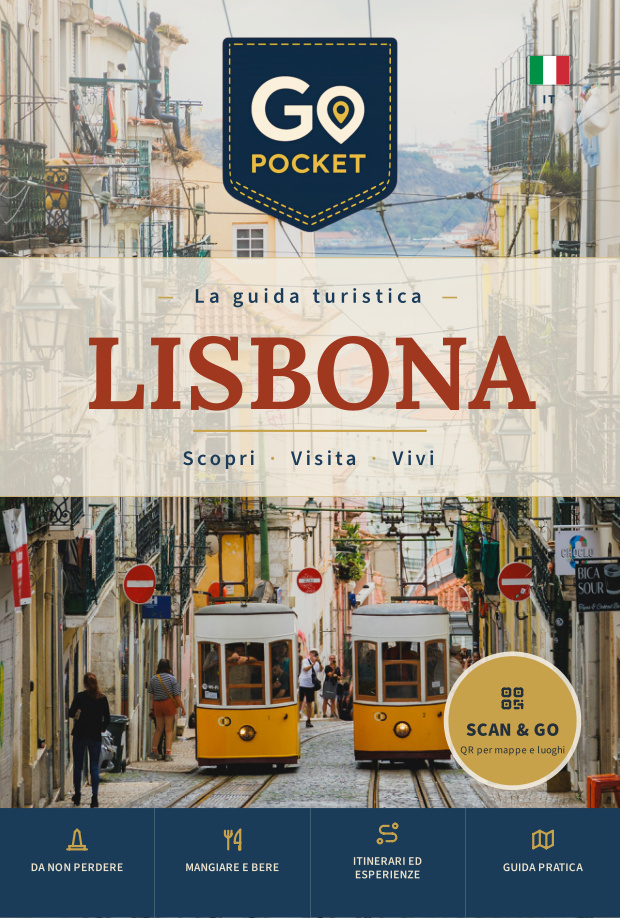
The guide to this city: Lisbon
Digital guide to Lisbon: what to see, where to eat, live maps and tips. Read it like an app, even offline.
Explore · € 4,99 →