Lisbon beyond postcards: how to get lost (and find yourself) in Europe's most human city
Climb on foot when everyone takes the tram
The historic tram that climbs Lisbon's hills has become, over the years, more of a tourist attraction than a daily means of transport. Lisboans, except for the oldest residents of the upper neighborhoods, avoid it during rush hours with the same naturalness they would avoid a line at a museum. And they're right: climbing on foot through the alleys of Alfama or Mouraria means entering a lateral world, made of laundry hung between buildings, of cats presiding over shabby windowsills, of women who have known each other for forty years and talk across the street without getting up from their chairs. Each staircase tells an enormous historical stratification: the Moors, the Christians, the great 18th-century earthquake that razed much of the city while leaving these hills intact, custodians of Lisbon's oldest memory.
Fado as ritual, not as spectacle
Many tourists experience fado in venues designed specifically for them, with fixed menus and timed performances. It's a legitimate experience, but it's a bit like listening to blues in a shopping mall: the form is there, the soul is elsewhere. Authentic fado is born from improvisation, from the silence that falls over the room when the fadista begins to sing, from the fact that no one is looking at their phone. It still exists, in certain historic neighborhoods, in informal evenings where music emerges almost by chance, between one conversation and another. The Portuguese key word is saudade, which doesn't simply mean nostalgia: it is longing for something that perhaps never existed, an emptiness that smells of beauty. Fado is the musical expression of this feeling, and to truly understand it you must first stop looking for it.
The Tagus as the axis of daily life
The river that bathes Lisbon is not just a scenic backdrop: for centuries it was the economic, spiritual and physical center of the city. From here the caravels departed toward worlds that the Portuguese didn't yet know how to describe, and here they returned laden with spices, stories and new diseases. Today the Tagus has recovered a more intimate relationship with Lisboans: the banks have become places of strolling, sports, and sunset gatherings. But just move away a little from the most frequented areas and you find corners where the river becomes something ancient and silent again, where the water changes color with the light and the horizon seems wider than it geographically makes sense. Some say that Lisbon has an almost obsessive relationship with the ocean even though the ocean can't be seen: it is a city that always looks beyond, toward something that hasn't arrived yet.
Eat where there's no English menu
Portuguese cuisine is among the most honest in Europe: few ingredients, long cooking times, flavors that don't try to amaze but to truly nourish. Cod — the famous bacalhau — is declined in many different recipes, and every Portuguese family swears that their version is the original one. But the most authentic culinary experience in Lisbon is not found in places with windows full of pastel de nata on display for tourists: it is found in small, almost anonymous places, where the menu of the day is written by hand on a blackboard and changes every day according to what the market offered that morning. In these places you eat next to clerks, craftsmen, retirees: you are part of a daily scene, not spectators of a gastronomic performance.
LX Factory and the genius loci of reinvented industry
There is an area of Lisbon that embodies better than any other the Portuguese capacity to recycle the past without erasing it: a complex of former factories transformed into a living cultural space, where libraries, designer studios, weekend markets and restaurants nestled among rusty machinery and iron beams coexist. It is neither a polished place nor artificially hipster: it still has the roughness of the industry it was, and this makes it honest. Under the viaduct that towers above it trains pass with a frequency that marks the time of the neighborhood, and that vibration of metal and movement becomes part of the atmosphere, almost an involuntary soundtrack. It is one of those places where you understand that Lisbon doesn't want to forget what it was in order to become what it wants to be.
Get lost in neighborhoods that change every year
Lisbon is a city in rapid transformation, and not all changes are welcomed with enthusiasm by its historic inhabitants. Entire neighborhoods that until a few years ago were popular and forgotten have become destinations for international residents, with consequent transformation of the commercial and social fabric. Mouraria, the neighborhood that was the heart of the medieval Moorish community, still maintains extraordinary cultural stratification: it is one of the few places in Lisbon where you hear languages from three different continents within a single alley. Príncipe Real retains a bourgeois and somewhat melancholic elegance, with its azulejo buildings and gardens where you sit to read. Real Lisbon doesn't exist in any of these places in particular: it exists in the passage between one and the other, in this urban space's capacity to contain contradictory stories without any one canceling out the others.
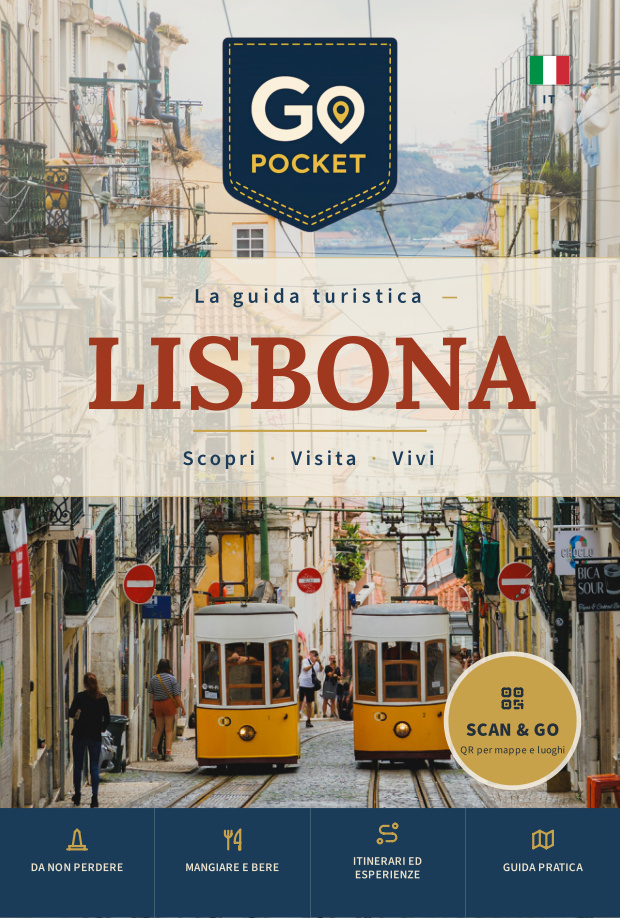
The guide to this city: Lisbon
Digital guide to Lisbon: what to see, where to eat, live maps and tips. Read it like an app, even offline.
Explore · € 4,99 →