Secret Lisbon: the curiosities that no guide tells you
A city with very ancient roots
Lisbon proudly claims an antiquity that surprises many European travelers: according to local traditions and some archaeological interpretations, the banks of the Tagus were already inhabited and commercially active in very remote times. This is not mere local pride: the traces found beneath the hill of the Castle of Saint George show layers dating back to the Bronze Age, passing through Phoenicians, Greeks, Romans and Moors. Every time you walk through Alfama, you are literally walking on millennia of layered history.
Fado has not always been melancholic
Fado, recognized by UNESCO as an intangible cultural heritage of humanity and the emotional soundtrack of Portugal, has origins far more turbulent and controversial than its current solemnity would suggest. In nineteenth-century Lisbon it was born in poor and notorious neighborhoods, among sailors returning from overseas, prostitutes and small criminals. It was street music, visceral and often scandalous, far from the composed and almost sacred atmosphere of contemporary fado houses. Some of the first female fado singers were women at the margins of society who used song as a form of survival and social challenge.
Historic trams do not carry nostalgia, but commuters
The old yellow trams that climb laboriously between historic neighborhoods, photographed thousands of times a day by tourists seeking the perfect image, are actually public transport vehicles still used today by residents to move between the hilly neighborhoods that would otherwise require exhausting staircases. What for the tourist is a vintage and almost cinematic experience, for the lady with the shopping bag is simply the quickest way to get home. This overlap between daily life and romantic imagination is one of the most fascinating tensions that Lisbon can generate without apparent effort.
The azulejos tell stories that no one reads anymore
The painted ceramic tiles that cover facades, churches and railway stations are not mere decorations: for centuries they functioned as a visual narrative system accessible even to those who could not read. They represented biblical scenes, naval battles, mythological episodes, geographical maps and even moral instructions. Stopping in front of an azulejo panel with the right attention means reading a story spanning hundreds of years, written with blue and white enamel.
The city that invented globalization
In the fifteenth and sixteenth centuries, Lisbon was probably the most cosmopolitan city in the known world. From the port of the Tagus left and arrived ships laden with spices from India, gold from Africa, sugar from Brazil, silk from China. The city was full of merchants of every ethnicity and religion, of freed slaves and navigators returning from voyages that no European had ever undertaken before. In this sense, Lisbon was one of the first great global metropolises in modern history, one of the places where the world began to take the form we recognize today.
Saudade: an emotion difficult to translate
Linguists and philosophers have debated for generations whether saudade is truly untranslatable or whether we have simply not found the right word in other languages. It is not nostalgia, not melancholy, not regret: it is something more complex and paradoxical, the painful and sweet presence at the same time of something or someone that is missing. The Portuguese consider it one of the keys to understanding their national soul, and Lisbon is par excellence its emotional capital.
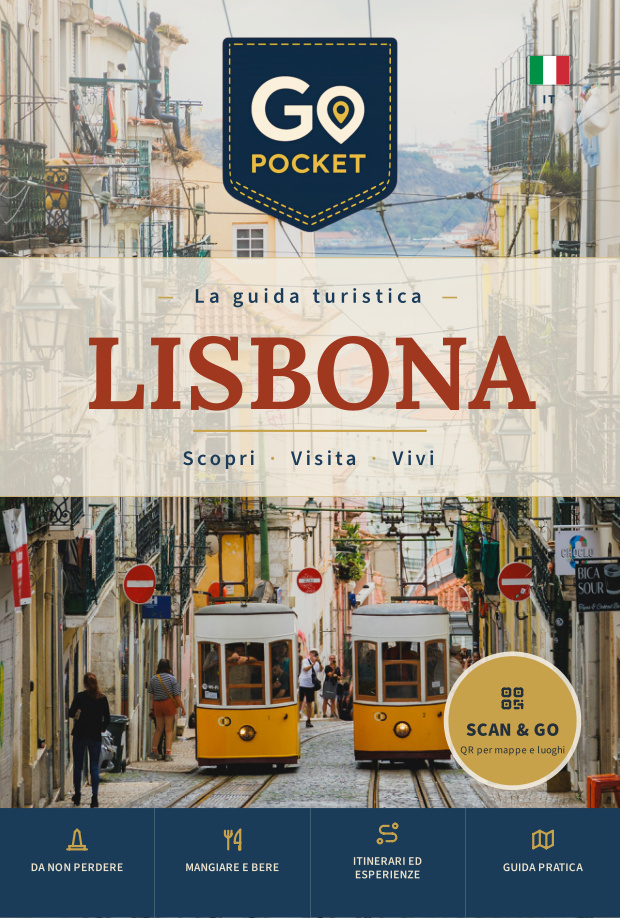
The guide to this city: Lisbon
Digital guide to Lisbon: what to see, where to eat, live maps and tips. Read it like an app, even offline.
Explore · € 4,99 →