An Unusual Itinerary: Discovering Athens Beyond the Classics

Introduction: Why Choose an Alternative Route
Choosing an alternative itinerary through Athens helps you avoid reducing the city to a sequence of ruins and overlooks. The Greek capital operates on multiple levels: ancient and contemporary, touristy and domestic, bustling and intimate. Just a few blocks away, you can move from a plaza crowded with visitors to a quiet courtyard. Athens has a distinctly strong urban character. It's not always orderly, and it doesn't always reveal itself at first glance—but that's precisely why it rewards those who walk without rushing. Neighborhoods tell stories of financial crisis, migration, politics, creativity, and daily habits with a clarity that no museum placard can fully capture. Exploring less-traveled routes also lets you spend your time more wisely. You'll see famous landmarks from unexpected angles and discover neighborhoods where local life hasn't been completely shaped by tourism. The result is a more grounded journey, built on brief encounters, informal stops, and genuine observation.
Anafiotika: The Village Within the City
Anafiotika is one of the most surprising places in central Athens: a small cluster of whitewashed houses, narrow staircases, and winding passages nestled at the foot of the Acropolis. It feels like a fragment of a Greek island transported into the urban heart, yet it's not a theme park—it's a real neighborhood rooted in stories of labor, internal migration, and adaptation. Its origins trace back to stonemasons and craftsmen who arrived from the island of Anafi, brought to the capital to help build modern Athens. They brought familiar ways of living: low houses, bright walls, minimal courtyards, practical use of space. Walking here means witnessing how a community recreated a domestic landscape far from home. Today, Anafiotika deserves respect. Its narrow alleys are photogenic, but they're still inhabited; an intrusive camera can disturb more than you'd think. The best way to experience it is to climb slowly, observing potted plants on steps, cats, half-open doors, and sudden glimpses of the city below—without turning the neighborhood into a film set.
The Artistic Ferment of Exarchia
Exarchia is a neighborhood that leaves no one indifferent. It has a long history of activism, community assemblies, independent bookstores, self-managed spaces, and student culture. Visitors seeking a domesticated version of Athens might find it rough; those who accept urban complexity, however, will grasp an essential part of contemporary Athens. Street art here isn't mere decoration. Murals, stencils, and graffiti reflect social tensions, political memory, irony, and anger. Some works change rapidly; others persist for years and become informal landmarks. Walk with awareness, without expecting a curated museum experience: Exarchia is an open laboratory, not an orderly outdoor gallery. Alongside painted walls, you'll find small exhibition spaces, independent bookstores, student-filled cafés, and gathering places where debate is part of daily life. The atmosphere shifts from street to street and moment to moment. Visit during the day or early evening, with genuine curiosity and without a voyeuristic attitude.
A Walk Up Lycabettus Hill
Lycabettus Hill offers one of the most effective perspectives for understanding Athens' geography. From the summit, you can distinguish the density of neighborhoods, the Acropolis, the sea on clear days, and the hills that interrupt the urban fabric. It's a brief climb, but it fundamentally changes your relationship with the city. You can reach the top on foot by following trails that wind through pine trees, or use the funicular railway available from the base. The walk is most rewarding if you take your time, especially during cooler hours. Comfortable shoes and water are sensible choices, even though the distance seems manageable. Lycabettus connects to ancient myths and stories, but today it functions mainly as an observation point. At the summit, you'll find a small chapel and viewing areas that fill with sunset visitors. Arriving a bit earlier helps you avoid crowds and watch as light gradually transforms facades, avenues, and hills.
The National Garden of Athens: An Urban Oasis
The National Garden is a genuine break from central Athens. It lacks the controlled appearance of some European monument parks—instead, it's shadier, more irregular, crossed by paths that branch off and corners where traffic noise fades. After hours among stone, asphalt, and sun, it can become a necessary respite. Its history is tied to the construction of the modern capital and a desire to create green space near the seats of power. Today it features Mediterranean plants, tall trees, small water features, and a constant presence of birds. You don't need to seek particular attractions; the garden's value lies in its slowness. It's perfect for a pause with a book, a stroll with children, or a break between busier visits. You can pass through to get somewhere else, but it's worth giving it time. Sitting on a bench and watching how locals actually use the garden offers an image of everyday Athens often overlooked by visitors.
Modern Art at the Museum of Contemporary Art
Understanding Athens beyond antiquity requires engaging with contemporary art. The National Museum of Contemporary Art, housed in a building with industrial heritage, demonstrates how Greek creativity has engaged with social transformation, European identity, political memory, and international movements. It's a visit that pushes your perspective forward. Exhibitions rotate regularly, so check the schedule before planning your day. Generally, the museum alternates between Greek and international artists, installations, video, photography, and conceptual research. Not everything is immediately accessible, but that difficulty can be valuable—it prevents you from seeking only familiar beauty. Including the museum in an unusual itinerary means accepting that Athens isn't simply a custodian of the past. The city has lived through economic crisis, urban change, and intense cultural debates, and many artists have transformed these into images, materials, and spaces. After your visit, even the surrounding walls and buildings seem to speak differently.
Monastiraki Beyond the Flea Market
Monastiraki is often associated with the flea market and crowded shopping streets. But stopping at this image would be reductive. The neighborhood is a convergence point of different eras: ancient ruins, Ottoman architecture, neoclassical buildings, Byzantine churches, modern signs, and shops that change function while preserving memory. Walking down side streets, away from the main flow, reveals more interesting details: hidden courtyards, weathered facades, workshops, small businesses tied to metalwork, leather, and secondhand goods. Not everything is picturesque, and that's fine. Monastiraki retains a concrete commercial energy—one of negotiations, stacked merchandise, and quick passages. The best way to explore is to alternate between historical observation and practical curiosity. A church wedged between modern buildings can tell more than a perfectly restored street. A cluttered workshop can reveal family relationships and manual skills. Here, touristic and everyday Athens continuously touch without fully merging.
Authentic Flavors in Local Markets
Markets are among the most honest places to understand a city. In Athens, the Central Market and surrounding food areas reveal a direct relationship with meat, fish, spices, cheeses, olives, legumes, and seasonal produce. It's an intense, noisy, sometimes raw environment—far from the polished idea of gastronomy for visitors. Visiting a market requires sensory openness. There are strong odors, vendors calling out, customers who already know what they want, and not always orderly paths. Here you understand how Greek cuisine is fundamentally domestic before it's touristy: soups, stuffed vegetables, simple fish, slow-cooked meats, dishes meant for sharing. To eat well outside predictable circuits, observe where workers, merchants, and families stop. The most authentic tavernas don't necessarily look ancient or rustic; often they're simple places with short menus and straightforward service. Better to ask what's available that day, accepting seasonality as part of the experience.
Nature Activities in the Surrounding Area
Athens is greener than it first appears. Around the city you'll find hills, trails, coastal stretches, and natural areas that let you break from the urban pace without organizing a complex excursion. Even a half day can suffice to see the capital from a broader, less congested perspective. Excursions through surrounding parks and heights suit those who want to hike, photograph, observe Mediterranean vegetation, or simply breathe easier. In summer, consider heat, sun exposure, and water availability; in milder seasons, these trails become among the most pleasant experiences in the Athens area. Those preferring sports activities might consider light trekking, trail running, cycling where conditions allow, or waterfront walks. You don't need to turn everything into adventure. Sometimes reaching a panoramic point outside the center helps you understand Athens' deep connection to mountains and sea.
Local and Lesser-Known Events
Neighborhood events offer a quiet window onto Athenian life. Beyond major festivals and well-publicized cultural events, there are concerts in small venues, church-related celebrations, pop-up markets, film screenings, university initiatives, and food-focused gatherings. The city has an informal calendar that changes frequently. The best times to catch this vitality are spring, early summer, and fall, when weather favors outdoor activities and local life regains momentum. Winter, though, can surprise with independent theaters, bookstores, small clubs, and cultural centers. It's worth asking locals once you arrive. Less-known food and wine experiences aren't necessarily structured events. They might be a tasting at a specialty shop, an evening dedicated to Greek wines, or a neighborhood gathering with simple food and music. The key is participating with discretion, remembering that not everything exists to entertain tourists.
Unique Culinary Experiences: Dining With Locals
Dining with local people offers access to Athenian culture that restaurants can only partly convey. Greek cooking is often familial, shared, tied to storytelling: a recipe can connect to an island, a grandmother, a difficult period, a religious celebration, or a Sunday habit. Private dinners and organized food gatherings should be chosen carefully, using trusted platforms, direct recommendations, or transparent operators. Verify what's included, communicate any dietary needs, and arrive with respect. You're not just buying a meal—you're entering someone's personal space for a few hours. During such dinners you'll often taste simple dishes: vegetables, cheeses, legumes, baked preparations, homemade desserts, local wines, or spirits. But the real value is the conversation. Asking how the neighborhood has changed, what's cooked during celebrations, or where people shop opens stories more interesting than many guidebooks.
Discovering Athens by Alternative Means
Changing your transport changes your perception of the city. On foot, Athens is made of hills, uneven sidewalks, and unexpected stops; by bike, it becomes a sequence of possible but carefully considered connections; from the sea, it appears as a capital oriented toward the Saronic Gulf, not just archaeological sites. Bike tours can be interesting, especially if guided by people who know traffic well, available routes, and appropriate paths. Some zones are simpler, others require experience and care. Don't improvise on chaotic main roads; instead, favor peaceful urban routes, parks, pedestrian areas, and coastal stretches. Explorations along the waterfront reveal another Athens: harbors, seaside walks, residential neighborhoods, beach clubs, small ports, and more open sunsets. A boat trip or a journey toward the coast helps you understand how much the sea is part of the city's identity. Afterward, the center seems less enclosed and more Mediterranean.
Books and Films for Better Understanding
Preparing with books and films helps you avoid a superficial perspective. Athens has been told many ways: as an ancient city, a modern capital, a place of crisis, a migration setting, an emotional and political space. Reading before you go lets you recognize tensions and continuities that would otherwise stay in the background. Among useful readings, look for contemporary Greek novels, recent reportage on Greece, unconventional travel writing, and brief essays on urban history. Even crime fiction set in Athens can be effective, as it crosses neighborhoods, offices, homes, and streets, showing the city through its daily mechanisms. Cinema offers a different access point. Contemporary Greek films, works set in the capital, and documentaries about Athenian society show interiors, peripheries, languages, silences, and conflicts. You don't need an exhaustive list—choose two or three titles and watch thoughtfully, perhaps after walking through the places they evoke.
Conclusion: Experiencing Athens Like a Local
Experiencing Athens like a local doesn't mean pretending to belong to a city that isn't yours. It means slowing down, respecting inhabited neighborhoods, asking questions respectfully, and accepting that not everything is designed for visitors. It's an attitude more than an itinerary, and it fundamentally changes your trip. An unusual Athens itinerary might start at Anafiotika, move through Exarchia, climb Lycabettus, pause in gardens, enter a contemporary museum, and end at a table with local people. But the best route remains flexible. The city rewards those who leave room for detours, conversations, and unplanned stops. Ready to experience Athens anew: away from crowds when possible, close to its daily reality. The icons will still be there, important and necessary. But alongside them you'll discover a capital of staircases, markets, hills, voices, art, and home cooking. It's this less obvious Athens that often stays longest in memory.
FAQ
What are the least touristy places in Athens?
Neighborhoods like Anafiotika and Exarchia offer experiences far removed from classic tourist circuits.
Where can I find an alternative itinerary in Athens?
Follow routes that explore hidden places and vibrant neighborhoods like Exarchia and Monastiraki.
How can I explore Athens differently?
Participate in bike tours, explore natural parks, and engage with local events for an unusual perspective on Athens.
What unusual experiences can I have in Athens?
Dinners with locals and visits to independent galleries show you a lesser-known side of the city.
Which Athens neighborhoods are worth discovering?
Anafiotika, Exarchia, and Monastiraki are perfect for those seeking authenticity and local culture.
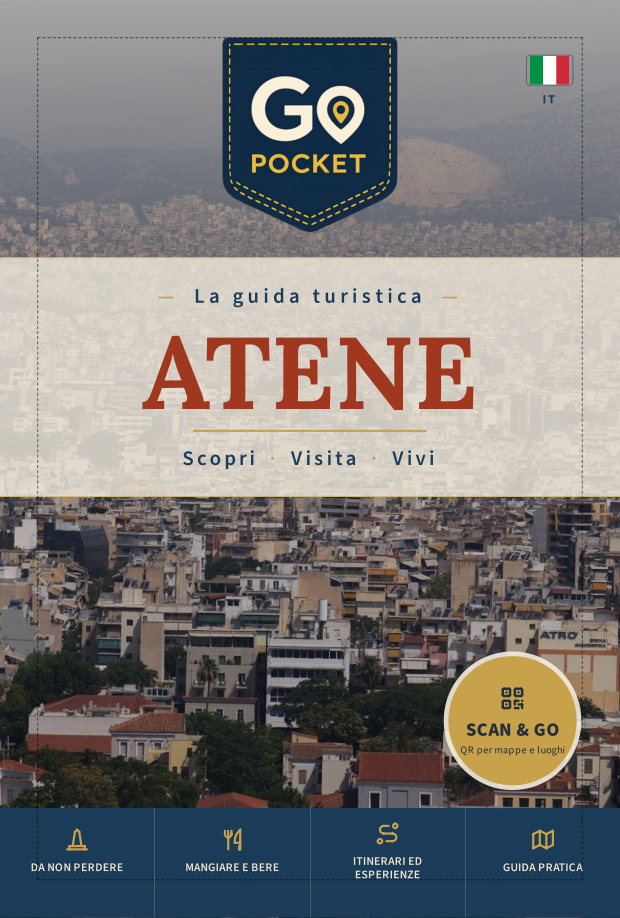
The guide to this city: Atene
Digital guide to Atene: what to see, where to eat, live maps and tips. Read it like an app, even offline.
Explore · € 4,99 →