Hidden Stories and Surprising Facts About Athens
The Acropolis's Hidden Legacy
The Acropolis looms so large in Athens's imagination that it risks seeming frozen, almost outside of time. Yet it has been inhabited, fortified, plundered, transformed, and reinterpreted for centuries. Before the classical temples came older structures, and after the Age of Pericles came vastly different religious, military, and political uses. Among lesser-known myths is the one tied to the Erechtheion, where tradition places the contest between Athena and Poseidon for patronage of the city. The sacred olive tree and the trident mark aren't just narrative details—they speak to Athens's need to link the urban landscape to its civic, agricultural, and maritime identity. Architecture too conceals subtle choices. The Parthenon isn't a perfectly regular box: the lines are corrected with slight curves, the columns aren't identical, and the overall effect pursues visual balance rather than geometric perfection. It's a useful lesson for visitors: on the Acropolis, perfection often emerges from small departures from the rules.
Plaka's Secret Stories
Plaka is often described as Athens's most picturesque neighborhood, but beneath the image of an evening stroll lies deep layering. Its streets partly follow ancient, Byzantine, and Ottoman paths, and the low-rise houses tell of a city that adapted rather than planned. Each courtyard seems to defend a piece of daily life. One of the strongest surprises is Anafiotika, a small cluster built by masons from the island of Anafi who arrived in Athens in the 19th century to work on the new capital. Its white, compact houses, huddled against the rock, aren't a fabricated set piece—they're a memory of internal migration and artisanal knowledge brought from the Cycladic islands. Plaka also preserves less obvious traditions, like its relationship with neighborhood festivals, minor churches, and celebrations tied to saints. On some streets more than in monuments, you feel continuity between community and ritual. You don't need to seek grand events: simply notice how an open doorway, a lit candle, or a set table can tell of persistent habits.
Urban Legends of Monastiraki
Monastiraki takes its name from a small monastery, and that already says much: one of Athens's most commercial areas carries a religious, intimate origin. Today the neighborhood blends stalls, shops, ruins, cafés, and crowded passages. It's a point where the city seems to shift language every few meters. Among the merchants circulate stories of objects found in attics, estates sold without knowing their worth, photographs of unknown families tucked inside books, lamps, and old records. Not all are verifiable stories, but they're part of the market's character: Monastiraki thrives on uncertain origins, on objects arriving from dismantled homes and scattered lives. The zone has been tied to commerce for centuries. Nearby streets once linked the Agora, Hadrian's Library, artisan quarters, and passages toward Piraeus. Walking here today means crossing a commercial geography far older than contemporary shops. Goods change, but the idea of meeting and negotiation endures.
Secrets in the Agora's Stones
The Agora was far more than a monumental space: it was where Athens debated, traded, administered, and judged. This is why its stones are less solemn than those on the Acropolis, yet often closer to real life. Here Greek political history takes human scale, made of passages, waits, and decisions. Among the most eloquent objects are the ostraka—pottery shards used to vote for ostracism. On those fragments appeared names of influential citizens the community could remove for a period. They're modest remains, but they show a concrete idea of power: Athenian democracy was participation, but also conflict, suspicion, and public control. Other finds tell of less-known practices: weights, seals, drawing lots machines, boundary inscriptions. The kleroterion, used to assign duties by lottery, reminds us that administration didn't depend on election alone. The Agora becomes a visible political laboratory where even an inscribed stone can explain more than a celebratory speech.
The Influence of Ancient Traditions in Modern Life
Modern Athens doesn't replicate antiquity, but often absorbs it into daily gestures. The public use of space, for instance, remains central: squares, sidewalks, markets, and cafés function as places of conversation, observation, and presence. It's not the ancient Agora, certainly, but the idea of gathering outside home retains clear social weight. Religious festivals show complex continuity between Orthodox Christian calendars, seasonal cycles, and family habits. Easter, more than other occasions, involves homes, churches, streets, and tables. Even name days hold strong roles: in Greece they often count as much as, and sometimes more than, birthdays, because they link a person to a community of names and saints. Popular beliefs also persist, like the evil eye, treated with varying degrees of seriousness but still present in everyday language. Seasonal bracelets, small charms, and household formulas shouldn't be read as postcard folklore. They're signs of a culture where the boundary between ritual, habit, and symbolic protection remains alive.
Hidden Architectural Curiosities
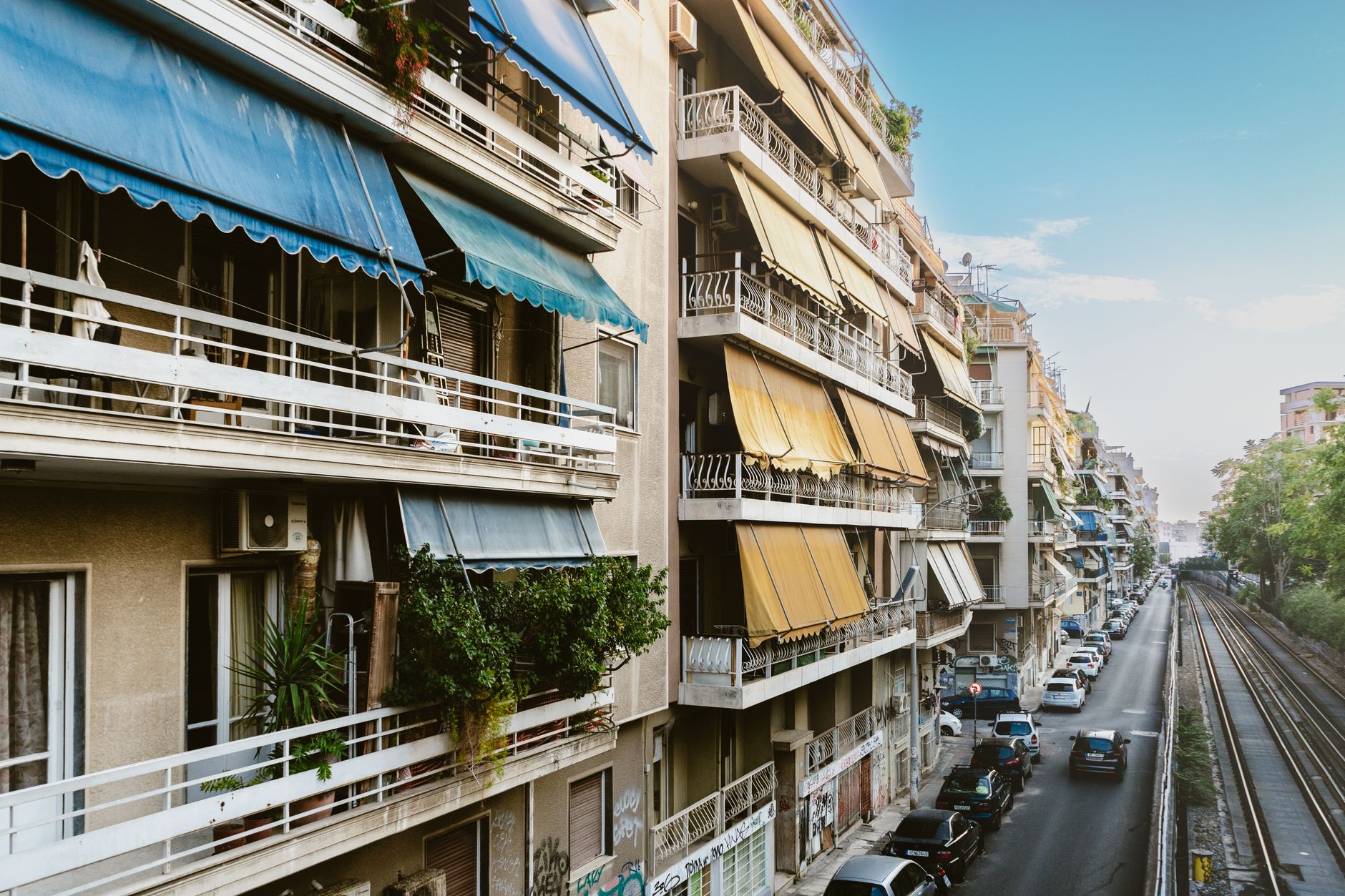
Athens is often judged as urbanistically chaotic—and in part it is. Yet this apparent discontinuity is what makes its architectural details interesting. Alongside ancient remains sit Byzantine churches tucked into the urban fabric, neoclassical buildings, working-class homes, modern palaces, and apartment blocks born from rapid 20th-century growth. One element to observe is the polykatoikia, the modern Athenian apartment building. Many visitors dismiss it as anonymous, but it reshaped how the city is lived: continuous balconies, sun awnings, plants, antennas, street-level shops. It's everyday architecture, often imperfect, that tells of density, family, ownership, and climate adaptation. There are also hidden innovations in passages. During urban work and excavations, ancient traces have emerged and been integrated into public spaces and metro stations. This doesn't make Athens a tidy museum, but a city where the underground frequently interrupts the present. An archaeological detail might appear between a platform, a panel, and a missed train.
Hidden Truths Behind Neighborhood Names
Athenian neighborhood names are small historical maps. Some derive from monuments, others from families, trades, religious buildings, or productive activities. Understanding them helps you see Athens not as a sum of tourist zones but as an urban organism grown through accumulation, bearing traces of power, commerce, and working life. Kolonaki, for example, recalls a small pillar or column, a simple reference for an area that became synonymous with urban elegance. Gazi refers to the old gasworks, transformed over time into a cultural hub and nightlife area. Monastiraki, as mentioned, preserves a small monastery in its name. Other names have disputed or layered origins. Psyrri is associated with local traditions not always univocal, while Exarcheia is often linked to 19th-century figures and property before becoming known for universities, publishing, politics, and countercultures. Behind each name lies an urban story, not always linear, but rarely accidental.
Atypical Festivals and Equally Rare Traditions
Athenian celebrations don't coincide only with major cultural events or the tourist calendar. Moments exist that are more widespread and less spectacular, moments that shift the city's rhythm. During Apokries, the Greek carnival season, masks, meals, and evenings out blend with local and family customs, not always taking the form of an organized parade. Clean Monday, which opens the Orthodox Lenten season, brings many Athenians outdoors, often to hills and green spaces, with simple food and kites. It's a tradition tied to season, family, and the desire to escape urban density. Seen up close, it tells more than many official festivals about Athens's relationship with its heights. Then there are panigyria, neighborhood religious festivals tied to churches and saints, and family rituals marking life passages: baptisms, weddings, name days. For visitors, these aren't shows to consume but occasions to observe with discretion. They reveal a city that can be contemporary without fully shedding its communal bonds.
Voices of Athens: Transmitted Oral Histories
Many stories of Athens aren't written on plaques or panels. They pass through grandparents' tales, neighbor conversations, shopkeepers' memories, and songs. Oral tradition is especially important in a city that has known migration, war, rapid expansion, and profound social transformation. Stories tied to Greek refugees from Asia Minor, who arrived after early-20th-century upheavals, marked various Athens-area neighborhoods. They brought cuisines, music, trades, and family memories. In these stories, nostalgia isn't just personal—it becomes a way to explain flavors, accents, habits, and forms of solidarity. Rebetiko, the urban music born in working and marginal settings, also preserves voices of Athens and Piraeus. It spoke of work, prison, love, poverty, inner exile. Today it's often heard in more reassuring contexts, but it keeps a rough memory. It's a precious key to understanding what monuments don't say.
The Acropolis's Role in Collective Life and Imagination
For Athenians, the Acropolis is far more than an archaeological site. It's a point of orientation, a visible presence from terraces, streets, and hills—a reference that enters daily life even when you don't visit it. Its image appears on posters, books, signs, souvenirs, but also in public discourse about the city. In the 20th century, the Acropolis took on a value of resistance. During Nazi occupation, the episode of young resisters removing the German flag from the hill became part of Greek civic memory. Beyond rhetoric, it shows how deeply this place was perceived as political symbol, not merely archaeological. Today the Acropolis is central to debates on preservation, access, tourism, and national identity. Every intervention draws attention because it touches something belonging equally to Greece, Athens, and world heritage. When visiting, remember this dual level: ancient stone and contemporary imagination coexist in the same silhouette.
FAQ
What are the least-known facts about Athens?
Athens holds numerous stories tied to its monuments and neighborhoods that tourists often overlook.
Are there particular traditions in Athens?
Yes, Athens has unique traditions like local festivals and rituals linked to mythology and ancient history.
The guide to this city: Atene
Digital guide to Atene: what to see, where to eat, live maps and tips. Read it like an app, even offline.
Explore · € 4,99 →