Living Like a Local in Athens: Authentic Explorations

Introduction to Local Life in Athens
For those who live here, Athens is far more than the city of the Acropolis. It's a dense, sometimes demanding, often surprising capital where the past surfaces unexpectedly between a modern building and a busy street. Daily life unfolds in a constant balance between old habits and contemporary needs: the neighborhood market, the unhurried coffee, family as a strong anchor, work that requires getting around in ways that aren't always simple. The first secret to connecting with local life is accepting that Athens doesn't offer itself in neat packages. Some streets look neglected; others hide courtyards, small shops, modest workshops. Athenians are used to this layering: they know that behind an anonymous doorway might be a gallery, a student hangout, a taverna they've returned to for years. The city demands attention more than immediate wonder. Living Athens like a local also means understanding the value of shared time. A meeting can run longer than planned, an errand can turn into a conversation, lunch can extend without becoming a special occasion. Socializing isn't always loud, but it's constant. Those who visit the city with this mindset discover a less monumental, more human Athens—made of habits, relationships, and small loyalties to places.
Authentic Neighborhoods: Beyond Plaka and Monastiraki
Plaka and Monastiraki are part of Athens's imagined identity, but many residents live elsewhere in the city. In neighborhoods surrounding downtown, you see better how the capital has changed in recent decades: postwar apartment blocks, low old houses, corner shops, new venues, and cultural spaces coexist without a perfect design. Here life flows less according to visitor needs and more along daily routines: the bakery, the pharmacy, the mechanic, the neighborhood bar. Koukaki is a good example of this blend of tradition and modernity. Close to heavily visited zones, it maintains a strong residential character: families, students, professionals, elderly people who've known each other for years. Recently it's also attracted travelers and temporary residents, but it hasn't entirely lost its neighborhood pace. You move from contemporary cafes to simple shops, from lively streets to quieter ones where balconies tell a distinctly Athenian domestic story. Metaxourgeio shows another face of the city—rougher and more creative. A former working-class and industrial area, it's experienced visible changes, with artist spaces, studios, small theaters, and late-night venues alongside weathered buildings. It's not a neighborhood to observe casually: it also tells stories of social contrasts and complex urban change. That's exactly why it's worth exploring. Those who move through it respectfully encounter a less polished Athens, where art and daily life meet without staging.
The Ritual of Greek Coffee
In Athens, coffee isn't just a drink but a way of measuring time. People drink it in the morning, on a break, in the afternoon, often in company. Traditional Greek coffee, prepared slowly and served with grounds in the cup, coexists with newer habits like iced frothed coffee and its modern variations. For many Athenians, the point isn't choosing the most authentic product but finding the right place to sit. Historic cafes, especially in central areas, preserve a way of lingering that belongs to another era. Small tables, newspapers, political conversations, regular customers who recognize each other without introductions. Not all have stayed the same, and some have adapted to new crowds, but the idea endures: coffee is a reason to observe, discuss, catch your breath. Even in newer bars, spending time is often accepted as part of local culture. The truest ritual isn't in formal gesture but in the slowness of chat. In Athens a coffee can last a long time, especially among friends. People discuss work, family, politics, rent, soccer, music, without following any set order. Visitors should try not to treat the bar as a quick stop. Sit down, watch how the room moves, listen to the tone of conversations: it's one of the simplest ways into the city's rhythm.
Local Fare: A Journey Through Authentic Flavors
Everyday Athenian cooking is less stereotyped than you might think. Sure, there are dishes known worldwide, but residents seek dependability, simple ingredients, and a familiar connection with a place. A beloved taverna doesn't need to look perfect: it should cook well, maintain consistency, make diners feel recognized. Meals are often shared, with dishes in the center and tastes passed from person to person. In local tavernas you find preparations that tell the story of home-cooked Greece: cooked vegetables, legumes, cheese, fish when season and circumstance allow, grilled meat, yogurt or eggplant-based sauces, baked dishes tied to family tradition. Not everything is light, not everything is for tourists, not everything is the same from one neighborhood to another. The best way to find your way is by watching where people of different ages eat, not just passing groups. Athenian street food answers a different need: eating well and quickly without sacrificing flavor. Filled pastries, skewers, savory and sweet baked goods accompany workdays, evenings out, breaks between errands. Here too it's worth avoiding the idea of mindless eating. Often behind simple food lies a precise habit: the bakery chosen each morning, the trusted kiosk, the stop after a long night out.
How Locals Get Around: Public Transportation
Athenians move around by combining different transit methods, patience, and practical knowledge of the city. The metro is often the clearest solution for crossing the center and linking important areas, while buses and trolleybuses cover broader, more spread-out zones. Trips aren't always direct: traffic, heat, distances, and urban layout all shape daily choices. Those living in Athens quickly learn which routes to avoid at certain times and which pedestrian shortcuts to use. To use public transit sensibly, it helps to do as many residents do: check current information, allow extra time, don't expect every connection to be perfect. The metro also reveals an interesting side of the city, because certain stations display artifacts and historical references discovered during construction. It's very Athenian: even an ordinary trip can remind you that beneath the modern city lies another level. Walking remains essential, even if Athens isn't always pedestrian-friendly. Narrow sidewalks, hills, scooters, and traffic all require attention. Yet many central distances are better understood on foot, passing from a commercial street to a residential one within minutes. Bicycles exist, but they're not easy everywhere. Some Athenians choose them for specific routes, while others prefer walking, especially during cooler hours and in continuous neighborhoods.
Free Time: What Locals Do on Weekends
The Athenian weekend takes many forms. Some stay in their neighborhood, others head to the coast when weather permits, some visit a museum, catch a film, or enjoy a long meal with friends or family. The city offers plenty of options without needing complicated plans. A walk can become a coffee, a coffee can become dinner. For residents, free time is often flexible and depends more on company than destination. Museums and galleries extend far beyond the biggest famous names. Athens has small cultural spaces, foundations, independent galleries, studios, and exhibition venues showcasing contemporary Greek work. Some sit in unvisited neighborhoods, others appear in repurposed buildings. Interested Athenians follow word-of-mouth, seasonal programs, openings, and shows. For visitors, tapping into these circles means seeing a city that lives beyond its classical heritage alone. Trips to nearby areas are another common habit. Without traveling far, you can find hills, coastal stretches, archaeological sites beyond downtown, spots where lunch feels more relaxed. Every outing doesn't need to be an organized trip: often just a half-day away changes perspective. This relationship with the surroundings matters for understanding Athens. The city is intense, and many residents love it partly because they know when to take distance from it.
Holidays and Athenian Traditions
Holidays in Athens highlight the ties between urban life, religion, family, and public space. Some occasions feel intimate, experienced at home or in neighborhood churches; others fill streets, squares, theaters, and cultural venues. Visiting during a festive period shows a shift in rhythms: shops that empty or fill, families on the move, longer tables, conversations returning to traditional themes. The Athens Festival, in its various forms and locations, represents the city's most structured cultural face. It brings theater, music, dance, and performances to places that often dialogue with urban history. For residents it's not just a tourist draw: it's a season when the city engages with contemporary and classical languages, with Greek and international artists. Attending an event lets you see Athens as a living cultural capital, not an open-air museum. Religious and cultural holidays carry particular weight. Orthodox Easter, for example, is among the most observed moments, with rituals, family meals, and collective dimensions that run through the city. National holidays and local celebrations also show how memory and identity remain embedded in public life. The advice for visitors is simple: observe respectfully, avoid intrusive photography, accept that certain traditions belong first to those who practice them.
Street Art and Underground Culture
Athens has an intense relationship with street art. Murals, political graffiti, graphic interventions, and painted walls aren't just decoration: they often tell stories of social tension, economic crisis, desires for change, irony, and collective memory. In some neighborhoods the visual language of the streets becomes part of the landscape. Not everything is authorized, not everything has equal artistic value, but overall it returns a city that discusses itself on walls. Athenian underground culture moves between small venues, independent spaces, concert halls, artist collectives, and temporary initiatives. Live music plays an important role, from rock to electronic sounds, from reinterpreted rebetiko to contemporary experiments. Many places shift programming, identity, and audiences over time, so the scene is better followed than cataloged. Word-of-mouth remains key: an invitation, a poster, a conversation can open unexpected doors. This alternative side shouldn't be turned into exotic attraction. It emerges from real conditions: rent, abandoned spaces, youth creativity, protest, the need for expression. Those exploring it should do so attentively, avoiding reducing complex neighborhoods to photo backdrops. Athens underground is interesting precisely because it's not always comfortable or packaged. It shows a city processing its difficulties and energies directly, often roughly, but deeply urban.
Hidden Spots for Relaxation in the City
In a loud capital that's hot most of the year, rest spots have real value. Athenians know shaded benches, inconspicuous gardens, cooler streets, courtyards where noise drops. These aren't always secret in absolute terms; often they're simply spaces ignored by those following only main routes. The difference is in how you use them: actually stopping, not just passing through for a photo. Less-known gardens and parks show another side of Athens, slower and more everyday. You find elderly people, children, students with books, dog walkers, employees on break. Some green spaces are small, others larger, but all meet the same need: finding breathing room in a compact city. Even urban hills, approached without hurry, let you change scale and look at the city's fabric from above. Hidden courtyards are among the nicest surprises. They might belong to cafes, cultural centers, repurposed buildings, bookstores, or shared spaces. From the street you often notice nothing; then you enter and noise drops. Panoramic views, meanwhile, aren't just the famous ones. Athens has many elevated points, and residents often choose the less crowded ones, maybe at sunset or after work, to find mental distance from the city.
Layered Conversations: Small Talk and Line Dynamics
Local life in Athens also passes through how people speak to each other. Pleasantries matter: a greeting, a question about family, a joke about weather or traffic can precede even the simplest request. It's not just formal courtesy but a way of acknowledging the other person. In neighborhood shops, at the market, at the bakery, or in a bar, the relationship can be nearly as important as what you're buying. Lines at service counters tell this dynamic well. They don't always follow rigid order as visitors might expect, but they have implicit rules: who arrived first, who just needs something quick, who knows the vendor, who joins the conversation. This can be disorienting, but it's rarely pure chaos. It's practical sociability, partly theatrical, where tone of voice and familiarity influence the pace of waiting. To fit in without frustration, watch before you act. A greeting in Greek, even simple, is often appreciated. Patience helps more than efficiency. Athenians can be direct but not necessarily rude; they can discuss with energy then smile a minute later. Grasping these nuances lets you live the city with less distance. Athens is made of overlapping conversations, and much useful information passes through them.
The Story of Athenian Folk Traditions
Athenian folk traditions emerge from many layers: the ancient world, Orthodox Christianity, Ottoman influences, internal migrations, memory of communities arriving from Asia Minor, transformations of the modern capital. Speaking of authenticity in Athens means recognizing this mix. The city hasn't preserved an unchanging culture but has absorbed people, music, recipes, words, and habits, turning them into everyday practices that residents often consider normal. Ancient influences surface less grandly than expected. Daily life doesn't constantly reference philosophers or temples, but the relationship with public space, discussion, theater, and the memory of places remains present. A walk can cross centuries without changing neighborhoods. Even some festivals, names, stories, and family references maintain distant ties, reworked through religion, school, language, and contemporary use of the city. Folktales and popular legends continue circulating in quiet forms. They might concern hills, churches, old buildings, historical figures, musicians, neighborhoods that have changed over time. Often they're passed down in families or through conversations between residents, more than through official routes. This is where Athens becomes most interesting: not in hunting for pure history, but in how residents hold memory and present together. Living the city as a local means listening to these stories, without expecting to own them.
FAQ
Which Athens neighborhoods feel most authentic?
Koukaki and Metaxourgeio are neighborhoods offering genuine local experience away from crowded tourist zones.
Where can I eat like a local in Athens?
Family-run tavernas scattered through residential areas and street food vendors in Psiri offer authentic local dishes.
What do locals do in their free time in Athens?
Athenians visit lesser-known museums, attend local festivals, and relax in hidden city parks.
What are the main cultural traditions in Athens?
Athenian culture is rich with religious holidays, traditional music, and celebrations of historical events.
How does public transportation work in Athens?
Athens has metro, buses, and trolleys that are accessible and convenient for getting around the city.
What local events should I attend in Athens?
The Athens Festival and celebrations tied to religious holidays are must-see events for experiencing local culture.
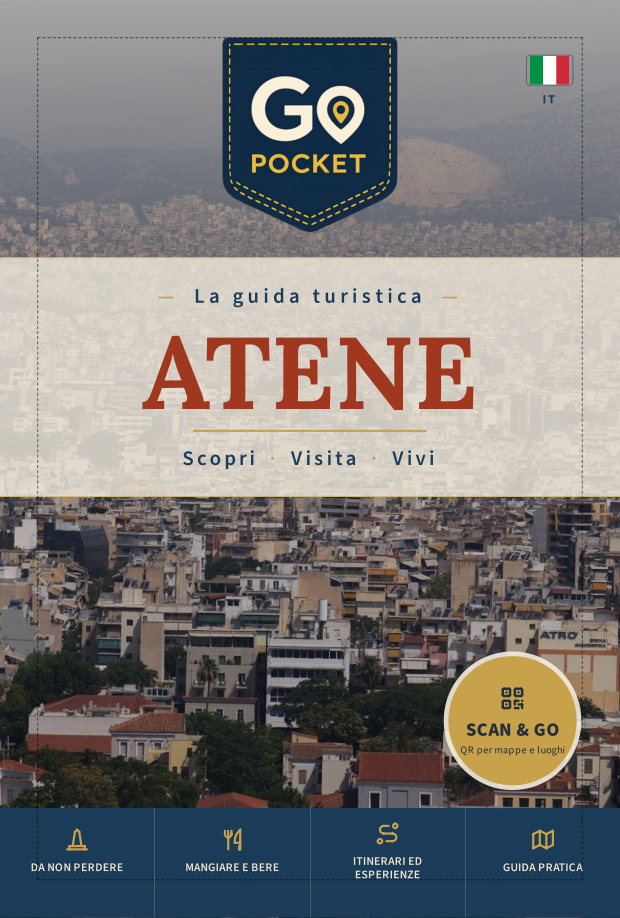
The guide to this city: Atene
Digital guide to Atene: what to see, where to eat, live maps and tips. Read it like an app, even offline.
Explore · € 4,99 →