Discovering Athens: How History Shaped the City's Character
Understanding Athens' Historical Roots
Athens' origins blur the line between history and myth. The Acropolis hill served as a natural landmark long before it became a monumental symbol: high, visible, defensible, it allowed control of surrounding territory. Around this nucleus grew a community that, over centuries, learned to transform geographic position into political and cultural identity. The city didn't emerge as a capital in the modern sense. It grew through the union of villages, local cults, and agricultural interests, then opened to the sea through its relationship with Piraeus. This balance between land and seafaring proved decisive: Athens became a city capable of trading, debating, absorbing influences, and reworking them. Even in its earliest phases, a recognizable trait emerges that persists today: Athens rarely completely erases what came before. It incorporates, repurposes, and places it alongside something new. The contemporary city, with its visible stratifications and discontinuities, preserves this ancient habit of coexisting with different time periods.
Greek Mythology's Impact on Athenian Culture
Mythology in Athens wasn't a collection of distant stories—it was shared language. It explained origins, hierarchies, collective fears, and aspirations. Athena, goddess of wisdom and strategy, became the city's central reference not just through its name, but for what she represented: practical intelligence, control, the capacity to protect while honoring thought. The bond with Athena influenced rituals, festivals, and civic imagination. The goddess wasn't perceived as abstract: she was present in processions, offerings, sculpted images, and in how Athenians narrated themselves. The idea of a community guided by reason, despite conflicts and contradictions, found in her a powerful symbolic form. Myths entered daily life through theater, education, and public celebrations. Stories of heroes, divinities, and genealogies helped interpret political choices and moral dilemmas. Today, visitors to Athens encounter these myths not as tourist decoration but as traces of a city that built its memory through shared narratives.
The Classical Era and the Birth of Athenian Democracy
Classical Athens became one of history's most-studied cities, but its legacy shouldn't be uncritically idealized. Athenian democracy emerged within a society with glaring limits: it excluded women, slaves, and resident foreigners. Yet it introduced unprecedented political practice based on direct citizen participation, public debate, and collective responsibility for decisions. Pericles embodies this era because he gave political and cultural form to Athenian ambition. Under his leadership, the city invested in public works, civic rituals, theater, architecture, and assembly life. Democracy became more than institutional system: it became a way of occupying urban space, speaking publicly, engaging and competing. The agora was where this political culture took shape. More than a marketplace, it was a social organism: commercial hub, courthouse, meeting ground, and forum for discourse. There, Athenians developed their tradition of public speech—a practice that still seems to resurface in crowded cafés, neighborhood discussions, and vibrant street life.
The Acropolis and Parthenon: Symbols of Power and Culture
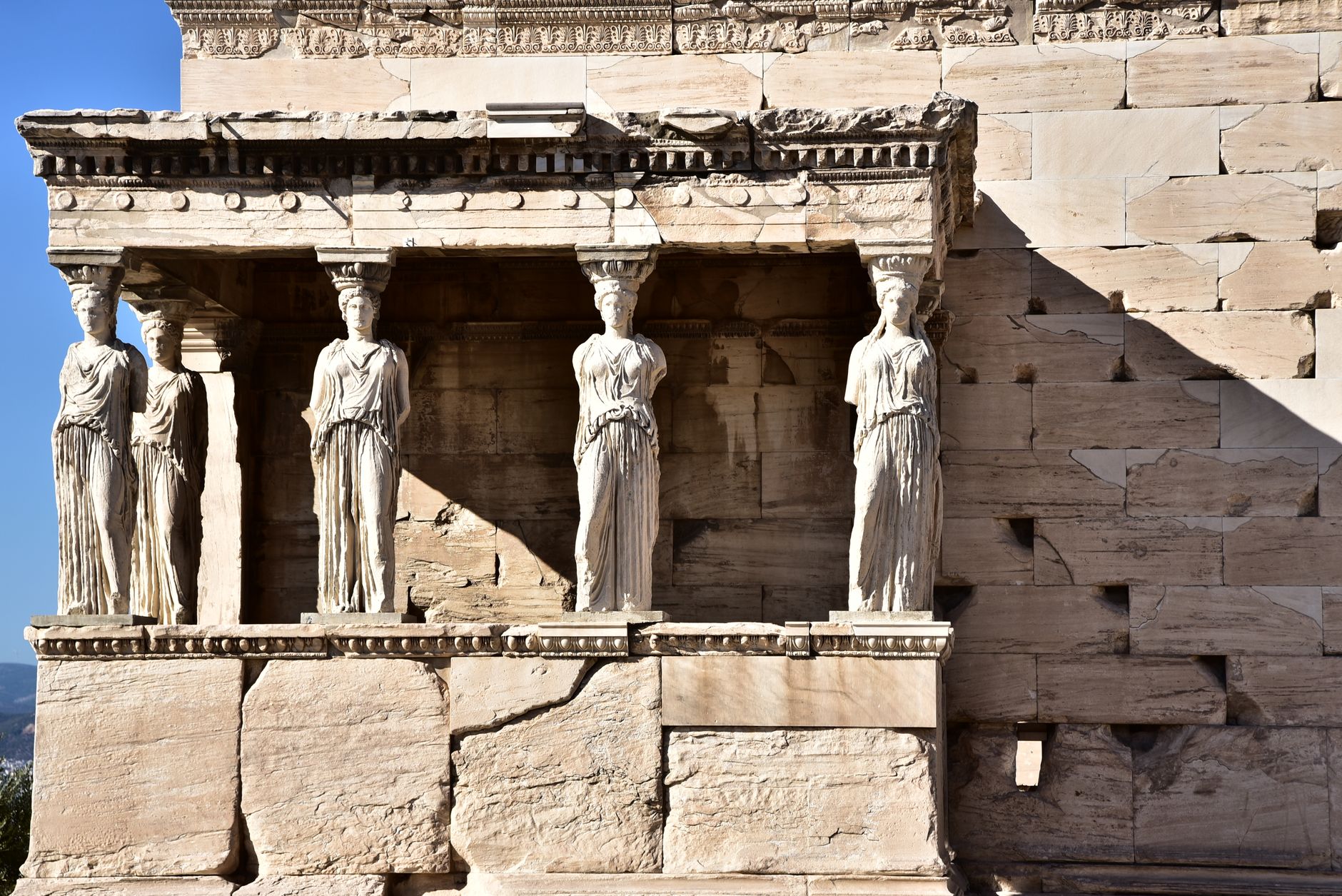
The Acropolis dominates Athens physically and mentally. It's not simply a hill with famous monuments: it's the point from which the city learned to represent itself. After destruction during conflicts with Persia, monumental reconstruction took on precise political value. It demonstrated capacity for recovery, wealth, technical mastery, and shared vision. The Parthenon, dedicated to Athena, united religious function, artistic program, and civic message. Its apparent perfection shouldn't obscure its context: a powerful, proud city consolidating its influence. Sculptures and architectural proportions conveyed order, but also deliberate assertions of prestige. For contemporary visitors, the Acropolis may seem separate from the modern city. Actually, it constantly engages with it. Visible between buildings and rooftops, disappearing and reappearing as you move through streets, this visual relationship reminds us that the past in Athens isn't confined to an archaeological precinct: it still conditions orientation, imagination, and how the city is perceived.
Life in the Agora: Athens' Crossroads of Culture
The ancient agora was Athens' operational heart. Here people bought, sold, debated, heard news, met magistrates, craftspeople, philosophers, and merchants. Its importance stemmed not from a single building but from concentrated diverse activities. It was permeable space where political and everyday dimensions merged. Within this interplay emerged a significant aspect of Athenian character: familiarity with confrontation. Ideas circulated not only in philosophical schools but in the city's common spaces. The presence of foreigners, merchants, and travelers broadened Athenian perspective, within a society keenly aware of its internal distinctions. Visiting today's agora area requires imagination. Ruins alone don't restore the noise, dust, voices, and tensions of that place. But its openness helps you understand Athens: a city where public space long served as theater for material and intellectual exchange, where the street remains part of collective conversation.
The Greco-Persian Wars and the Peloponnesian War
Wars against Persia left Athens with double inheritance: trauma and pride. Destruction was real, but subsequent Greek victory fueled a resistance narrative that would weigh heavily. Athens transformed the wound into political story, presenting itself as defender of Greek freedom and reinforcing its Aegean role. This growth created tensions. Athenian naval power, alliances, and tribute arrangements created fragile equilibrium with other Greek city-states. The Peloponnesian War exposed the harder side of Athenian ambition: attrition, instability, lost confidence, profound internal division. The city celebrating democratic debate experienced fear, drastic decisions, and deep fractures. These conflicts shaped a less linear urban character than the myth of classical greatness suggests. Athens learned that culture coexists with political violence, and prestige doesn't protect against defeat. This awareness makes its history more human: not triumphal arc but alternation of drives, errors, and fresh starts.
Roman Rule and the Byzantine Era
When Athens entered the Roman sphere, it lost political power but retained strong cultural prestige. For educated Romans, the city remained a place of formation and memory. This shift transformed its appearance: new buildings, infrastructure, and public spaces inserted themselves alongside classical traces, making Athens a city of overlapping inheritances. Roman times didn't simply imitate the Greek past. It brought new ways of building, administering, and experiencing the city. Some urban interventions expanded the monumental area and created new gathering points. Athens became, partly, a city staging its own antiquity for a wider audience—almost anticipating the cultural role it would play in later centuries. With Byzantium, the symbolic center shifted. Christianity redefined spaces, rituals, and priorities. Ancient temples transformed, churches rose at strategic points, religious art introduced new images and rhythms. The city became more inward-focused, less tied to grand classical gesture, yet continued living within its ancient stones, adapting them to a different spiritual horizon.
Ottoman Rule and Cultural Revival
The long Ottoman period left Athens complex traces, often less visible because partly erased or absorbed by later transformations. The city wasn't then the great capital we imagine: it had more modest dimensions, articulated local life, and coexistence of communities, religious practices, and daily habits linked to the eastern Mediterranean world. Ottoman heritage shouldn't be read only through absences. Certain ways of using space, neighborhood centrality, and life around commercial meeting places left cultural imprints difficult to separate from the rest. Modern Athens often sought to present itself as direct heir to classical antiquity, but its actual history is more stratified. Between the 19th and 20th centuries, cultural revival involved careful selection of the past. The new Greek capital wanted to reconnect with ancient Athens, promoting excavations, restorations, and neoclassical architecture. This choice gave the city a recognizable image but also created tensions: what to preserve, what to remove, which memory to center? Questions Athens still asks itself.
The Evolution of Athenian Architecture
Athens' architecture is an open-air archive, but not neatly organized by chapter. Classical stands beside Byzantine, neoclassical beside 20th-century construction, modernism beside contemporary interventions. This mixture isn't always harmonious, and precisely for that reason it tells the city's story well: Athens grew responding to concrete needs, political changes, internal migration, and economic pressures. After the modern Greek state's birth, neoclassicism held identity value. Reviving ancient forms meant building continuity with prestigious past and presenting the capital as legitimate heir to classical Greece. Many public buildings and bourgeois residences used this language for new institutional dignity. Shift to modernity was more pragmatic. Urban growth required housing, services, connections. 20th-century residential palaces, often criticized for repetitiveness, tell another story: a city that had to accommodate population and transform rapidly. From classical to modern, Athens didn't follow clean lines; it preferred adding, adapting, layering.
Women's Contributions to Athens' History
Discussing women in Athens' history means confronting what sources left in shadow. In classical Athens, female political participation was excluded, and public visibility for free women was limited by rigid social norms. Yet their presence was essential in religious life, family, economics, and transmitting cultural practices. Female rituals, religious festivals, and cults linked to fertility, household protection, and community continuity reveal dimensions of ancient Athens often overlooked. Women didn't sit in the assembly, but contributed to maintaining relationships, memories, and belonging. Mythical figures like Athena, Antigone, or Medea, though born from male narratives, opened reflection on power, law, and female voice. In modern Athens, women's contributions emerge more documentably in education, literature, art, work, and activism. Urban history isn't made only of generals, legislators, and architects. It's made of those who taught, cared, wrote, organized families and communities—often without dedicated monuments. Recognizing this presence makes the city more complete.
Historical Sites That Tell Athens' Story
Athens offers iconic places functioning as windows on the past, but the best way to understand them is not as isolated objects. The Acropolis, agora, ancient theater, Roman areas, and Byzantine churches form a network. Each site tells a different piece: religious power, political debate, spectacle, commerce, Christian faith, urban continuity. Beyond celebrated monuments exist less obvious traces that often strike precisely through discretion. Small churches nestled in modern fabric, archaeological remains visible between contemporary buildings, fragments of walls or columns repurposed—they remind us that Athenian history isn't concentrated only in major sites. It's diffused, sometimes almost domestic. These minor places encourage lingering. They invite observing details: a capital built into modern wall, ancient pavement below street level, a neoclassical facade marked by time. For understanding Athens, they matter as much as famous views. They tell the city's imperfect continuity and how the past remains present even when undemanding.
How History Shapes Daily Life in Modern Athens
Athens' history doesn't live only in museums. It appears in how inhabitants use squares, sidewalks, markets, and cafés. The city preserves strong culture of shared space: people talk, debate, observe, stay outdoors when weather permits. It's not replica of the ancient agora, but continuity of urban habits based on public presence. The relationship with the past is daily and practical too. Athenians coexist with archaeological sites, restrictions, discoveries, restorations, altered routes. History can inspire pride but also practical complication. This dual perception makes Athens different from cities transforming heritage into mere backdrop: here the ancient still interferes with ordinary life. Cuisine, language, music, and celebrations reveal other stratifications. Mediterranean, Balkan, Anatolian, and European elements intertwine with Greek national narrative. The result is a city less uniform than quick glance suggests. Athens thrives because it never fully coincides with a single epoch: it contains, debates, reworks them all.
Conclusion: Modern Athens, Heir to Rich History
Athens' character emerges from its ability to carry the past without being trapped by it. The city isn't always elegant, not always easy, doesn't offer only ordered images. But precisely this complexity makes it compelling. Each era posed an open question: how to live alongside such weighty memory without letting it become deadweight? From myth to democracy, wars to Rome, Byzantine Christianity to Ottoman inheritance, neoclassical capital to contemporary metropolis, Athens built identity through accumulation. Not everything is equally visible, and not everything was preserved. But remaining traces suffice to show a city accustomed to transformation. Explore Athens' historical roots to better understand its vibrant present. Approaching the city with this awareness transforms the travel experience: the Acropolis becomes more than a view, the agora more than an archaeological site, a modern neighborhood more than traffic and concrete. Everything participates in an ongoing, still-unfolding narrative.
FAQ
What are the main historical events that shaped Athens?
From the birth of democracy through wars and subsequent Roman and Ottoman influences, each period left its mark on the city's development and character.
What role did mythology play in Athens' history?
Mythology profoundly influenced Athenian beliefs, art, and traditions from antiquity forward, serving as shared cultural language and symbolic framework.
How did Athenian culture evolve over time?
Through influences of various rulers and cultural revivals, Athens maintained eclectic, rich heritage—layering rather than replacing earlier periods with later ones.
The guide to this city: Atene
Digital guide to Atene: what to see, where to eat, live maps and tips. Read it like an app, even offline.
Explore · € 4,99 →