Discovering Athens' Symbols: Myth, History and Culture
The Ancient Acropolis and Its Symbolic Meaning
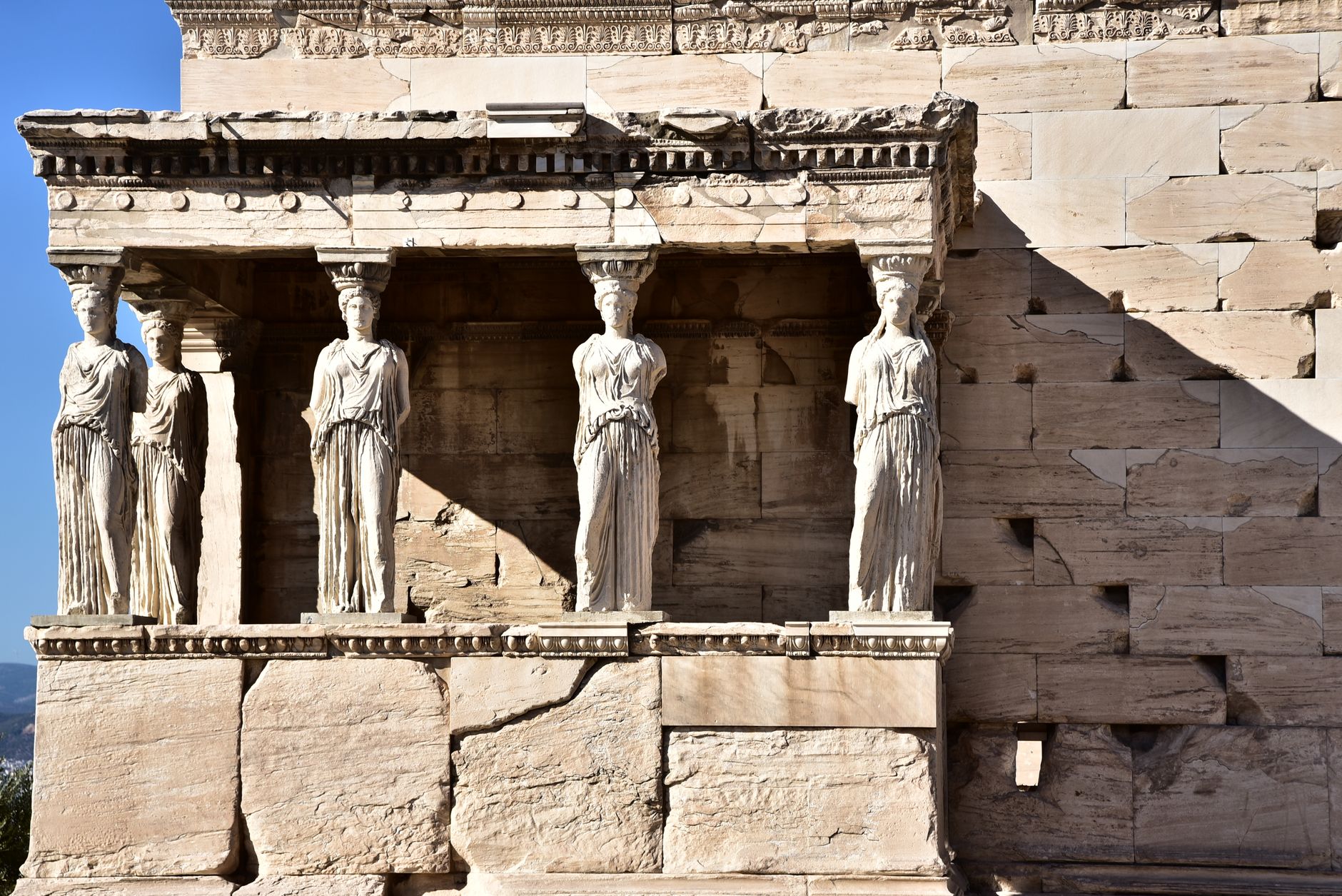
The Acropolis had practical origins: a rocky outcrop that was defensible, visible from afar, ideal for holding sacred cults and power. Over time, however, that hilltop became far more than a fortified citadel. It became the place where Athens projected its self-image: ordered, ambitious, devoted to the gods and aware of its role in the Greek world. After suffering destruction during the Persian Wars, the reconstruction of the Acropolis took on profound political and cultural weight. It wasn't simply about rebuilding temples—it meant reasserting collective memory. Walking through the ruins today means entering a narrative constructed through stone, proportions, pathways and vistas. The Acropolis's current cultural importance lies precisely in this layering of meanings. It's an ancient monument, a national symbol, a reference point for Western art and a daily presence in the Athenian landscape. It appears from different neighborhoods, often unexpectedly, and each sighting reminds visitors that in Athens, the past is never fully separated from everyday life.
The Legend of the Acropolis's Birth
Mythology recounts how the city's protection was contested between Poseidon and Athena. The god of the sea offered a sign of strength, linked to water or horses depending on the tradition; Athena gave the olive tree—useful, resilient, capable of nourishing and illuminating. The Athenians' choice honored the goddess and with her, an idea of prosperity rooted in ingenuity and measure. This competition isn't merely decorative storytelling. It explains how Athens wished to represent itself: not as a city ruled by military might alone, but as a community bound to labor, craftsmanship, agriculture and practical wisdom. The olive, still a familiar presence in the Greek landscape, becomes a concrete symbol, not an abstract one. The myth also includes Erechtheion, a complex figure of king, hero and ancestor. His name is tied to the land of Attica, to continuity between people and soil, to the Acropolis's oldest cults. Through Erechtheion, the legend of the city's sacred birth gains local and intimate roots, as if Athens were the direct daughter of its own stone.
The Parthenon: Symbol of Athenian Civilization
The Parthenon is often the first name associated with Athens, yet reducing it to a tourist icon means missing its power. It was conceived as a temple dedicated to Athena Parthenos and as a public declaration of Athenian greatness. Its forms, crafted with meticulous attention, communicated balance, control and prestige to both citizens and foreigners. Architecture and art worked in concert here. Proportions, optical refinements, pediment and frieze sculptures weren't secondary ornaments but parts of a civic message. The temple narrated myths, processions, conflicts between order and chaos, transforming stone into public language. Even fragmented, it retains a rare capacity to orient the eye. Its subsequent history is equally significant: pagan temple, Christian building, mosque, military storage, studied and restored ruin. Each phase left traces, scars and interpretations. This is why the Parthenon doesn't belong only to Athens's golden age—it's a monument to the continuity and fragility of history itself.
Greek Mythology and Its Influence on Athenian Society
In Athens, myth wasn't fantasy separate from public life. It explained origins, family bonds, cult foundations, duties toward the gods and behavioral models. Foundational myths helped explain who Athenians were and why they inhabited that specific place, with those particular festivals, institutions and memories. Stories of Theseus, Athena, Erechtheion and ancient Attic families circulated through rituals, theater, images and political discourse. Not everyone interpreted them the same way, and this very elasticity kept them alive. A myth could serve to unify, warn, legitimize a choice or challenge a power structure. In our time, mythology continues to filter through the city. You encounter it in museums, place names, signs, school books, but also in how Athens tells itself to visitors. Understanding these references lets you read statues, reliefs and places more deeply, without reducing them to mere photogenic backdrops.
Athena, Protective Goddess of Athens
Athena is a deity difficult to reduce to a single role. She's a warrior, but not impulsive; she protects the city but also represents craftsmanship, strategy, weaving, applied intelligence. For Athens, she was an ideal figure: strong without being chaotic, rational without being cold, connected to the civic realm more than to divine whimsy. Representations and worship of Athena dominated the Acropolis's imagination. The goddess could appear armed with helmet and shield, or associated with the olive and the owl. These weren't casual details—they signaled vigilance, wisdom, protection and the ability to transform resources into stability. Her worship united religion and political identity. In contemporary culture, Athena remains legible. She appears in the visual language of institutions, in tourist imagery, in classical studies, even in how people commonly perceive Athens as a city of reason and debate. She's a symbol still functioning because she speaks not only of ancient faith but of a way of imagining coexistence.
Erechtheion and the Forgotten Legend
Erechtheion is less known than Athena or Theseus, yet essential to understanding the Acropolis. In Athenian traditions, he appears as an ancient sovereign, an autochthonous hero, tied to the earth and the city's original cults. His story is complex, sometimes interwoven with Erichthonius, and this very ambiguity reveals the depth of local myths. Mythological accounts associated with Erechtheion speak of birth from earth, sacred descent, sacrifice and community defense. They aren't linear like a modern novel; they resemble deposits of memory instead. Each version preserves a fragment of how Athenians conceived the relationship between lineage, territory and public destiny. His role on the Acropolis emerges especially through the Erechtheion building itself—asymmetrical and fascinating because adapted to diverse cults and ancient memories. Here the visitor senses a less monumental, more intimate Acropolis, layered with religious signs. It's where legend appears not as ornament but as the deep structure of space.
Symbolism and Art on the Acropolis
Art on the Acropolis wasn't created to be viewed in silence within neutral halls. It was part of a religious and civic pathway, exposed to light and procession movement, to the gaze of those who knew myths and genealogies. Every cultural fragment had a position and function, even when we now see it isolated or reassembled in museums. Symbolism passed through scenes of mythical battles, divine figures, animals, ritual gestures and scale relationships. The struggle between Greeks and Amazons, between gods and giants, between order and threatening forces wasn't mere ancient narrative—it communicated an idea of equilibrium to defend. Athens represented itself as capable of containing disorder. Influential artists linked to major Acropolis programs worked within a collective project, sustained by public commissions and exceptional skills. Celebrated names like Phidias indicate an era, but behind each work stood workshops, stone-carvers, designers and laborers. Remembering this makes the monument less abstract and more human.
Influencing the Modern World: Connecting Mythology to Today
Greek mythology continues influencing the modern world because it offers recognizable narrative forms. It speaks of ambition, limitation, responsibility, conflict between individual and community. Athens, through its symbols, concentrates many of these questions. It doesn't offer simple answers but stages tensions that remain current. Lessons from mythology shouldn't be read as rigid moral codes. The myth of Athena invites consideration of practical intelligence's value; hero stories show the risks of arrogance; tragedies born in the Athenian world interrogate justice, revenge, law and family. These themes continue appearing in public debate and the arts. Timeless values connected to Athens don't coincide with an idealized past. Ancient Athens had both grandeurs and contradictions, exclusions and conflicts. This is precisely why it remains useful: not as a perfect model but as a historical laboratory. Visiting its symbols also means recognizing how fragile and demanding every idea of civilization is.
Lesser-Known Symbols of Athens
Beyond the Acropolis and Parthenon, Athens preserves less-celebrated symbols that help escape too-predictable readings. The olive tree, the owl, geometric patterns, traces of ancient sanctuaries, hills linked to public life compose a rich urban lexicon. Not all attract equal attention, but they often better explain the city's continuity. Recent discoveries, broadly speaking, aren't only about new artifacts. The work of archaeologists, conservators and scholars rereads known materials, corrects interpretations, reconstructs contexts. A pottery shard, an incomplete inscription, a statue base can shift how we understand a place. Their historical importance is concrete: they reveal an Athens made not only of grand monuments but of daily practices, neighborhood cults, family memory, craftsmanship and commerce. For the curious traveler, seeking these signs means slowing down. The city isn't exhausted by its most famous monument; it often speaks better through lateral details.
The Hero's Journey: Modern Interpretation of Athens's Myths
The hero's journey, read through a modern lens, finds fertile ground in Athenian myths. Theseus facing trials and monsters, Athena guiding with intelligence, Erechtheion embodying connection to the city—they're distinct figures, but all revolve around transformation. The hero isn't only one who wins but one who changes position in the world. Narrative analysis of Athens's myths reveals patterns of departure, crisis, choice and return. These schemas continue working because they speak of recognizable human passages: becoming adult, accepting responsibility, confronting limitation, choosing between personal interest and common good. Historical distance doesn't cancel the story's efficacy. Influence on the arts is visible in literature, theater, film, graphics and video games. Contemporary authors rework myths, shift them to new contexts, give voice to marginal characters. Athens thus remains a narrative reservoir: not a closed archive but a set of stories each era returns to question.
Savoring Athenian Culture Through Its Symbols
Athens's symbols don't live only in archaeological sites. They enter daily life through gestures, words, food, festivals, religious and civic images. The olive, for instance, isn't just a mythic emblem—it points to cultivated landscapes, oil, food, agricultural labor, family memory. The symbol becomes concrete experience. Living cultural traditions show how the city holds ancient and contemporary together without turning everything into spectacle. In museums you observe artifacts, but in the streets you grasp a more spontaneous relationship with memory: place names, school references, conversations, urban habits. Athens doesn't preserve the past under glass; it absorbs and reworks it. Festivals and celebrations, ancient or modern, help clarify this mechanism. Some directly echo Greek Orthodox religious tradition, others dialogue with classical heritage through music, theater, readings and cultural pathways. For visitors, respectfully participating in these moments means seeing symbols move within a real community.
From Past to Future: Athens's Symbols' Role in Tourism
For today's visitors, Athens's symbols are often the trip's main reason. The Acropolis promises an encounter with universal history, but the experience depends greatly on how you approach it. If you're seeking only a photo, the place remains silent; if you know myths and contexts, each passage gains density. Authentic experiences don't require secrets or undiscovered corners. They often arise from unhurried visits, preliminary reading, museum stops, walks connecting ruins, neighborhoods and hills. Athens rewards those who relate monuments to the lived city—noisy, irregular, contemporary. Cultural preservation is the crucial point for the future. Athens's symbols belong to Greece but are also shared heritage for an international community of scholars and travelers. Respecting site pathways, rules and fragilities isn't mere formality—it's the simplest way to let others encounter the same history.
Conclusion: Why Athens's Symbols Are Eternal
Athens's symbols seem eternal not because they've remained intact but because they've weathered change, uses, damage and interpretation. The Acropolis, the Parthenon, Athena, Erechtheion and the city's minor signs continue speaking precisely through their layering. They're ancient but not static. Their strength springs from uniting myth, history and culture. Myth shapes origins, history shows transformations, contemporary culture decides how to view them today. When these three levels meet, Athens stops being merely an archaeological destination and becomes a place of still-open questions. Discovering Athens's legendary symbols means preparing for a more conscious and richer visit. You needn't know everything before leaving, but arriving with curiosity and respect helps. The city does the rest: offering ruins, stories, contrasts and continuity, leaving it to travelers to connect them.
FAQ
What is the legend of the Acropolis in Athens?
The legend tells of a competition between Athena and Poseidon to become the city's protective divinity.
What is Athens's primary symbol?
The Parthenon is considered Athens's primary symbol, representing its cultural and historical legacy.
Why is the Parthenon important for Athens?
The Parthenon is a symbol of democracy and Athenian civilization, as well as an architectural masterpiece.
Who was Athena in Greek mythology?
Athena was the goddess of wisdom and strategic warfare, and Athens's protector, symbolizing the city's intellectual and artistic strength.
How did the legend of Erechtheion originate?
Erechtheion was a mythical king of Athens, originating from legends often connected to divine ancestry and the Acropolis.
The guide to this city: Atene
Digital guide to Atene: what to see, where to eat, live maps and tips. Read it like an app, even offline.
Explore · € 4,99 →