Surprising Facts About Athens You Didn't Know Yet
The Hidden Origins of Democracy
When we talk about Athenian democracy, the most common image is citizens gathered in assembly, ready to discuss and vote. True, but incomplete. Athens' democracy emerged in a very different context than ours: it applied only to part of the population, excluding women, slaves, and foreign residents, and it functioned through concrete practices like lotteries, people's courts, and public debates. Its strength lay precisely in the habit of participation. Walking today through the hills and spaces of the ancient city reveals that politics wasn't an abstract idea but a daily physical and vocal exercise. Women had no formal access to the assembly—a fundamental limitation of ancient democracy. Yet the city cannot be understood without recognizing their role in public rites, religious festivals, and transmitting family memory. Priestesses, participants in the Panathenaea, women involved in cults of Demeter and household celebrations maintained a civic order that male politics often took for granted. Figures like Aspasia, remembered ambiguously in ancient sources and filtered through bias, suggest that cultural influence could flow through unofficial channels. Beyond the Agora, which remains central, there are less obvious places to trace Athenian democracy. The Pnyx, for example, doesn't strike like a temple, but it's one of the city's most eloquent spaces: a bare, open hill where the landscape helps you imagine the weight of public speech. The Areopagus too, linked to judicial and religious functions, shows a city where law, myth, and politics overlapped. The Kerameikos, with its tombs and ceremonial ways, reminds us that citizenship was also collective memory, honoring the dead, and building shared identity.
Myths and Legends in Athens' Streets
Athens doesn't use mythology as mere tourist decoration. It incorporates it into names, symbols, emblems, images repeated on public buildings, and stories tied to the terrain's relief. The myth of Athena and Poseidon's contest for the city's patronage—olive tree versus salt water—isn't just a textbook story: it explains how Athenians relate to the Acropolis, to olive trees, to the idea of a city founded on practical wisdom. Even today, the olive tree is a discreet but constant presence in gardens, courtyards, and the visual language of the capital. Some neighborhoods seem born from layering rather than orderly planning, yet this apparent irregularity also speaks to legends. Plaka climbs the Acropolis' feet like an inhabited extension of sacred landscape. Anafiotika, with its white houses and narrow passages, doesn't originate in antiquity but from a more recent history of masons who came from the Cyclades; yet, seen against the sacred rock, it feels almost like an urban fairytale. Lycabettus Mountain, according to tradition, is a stone Athena dropped while building defenses for the city: a myth transforming a hill into an interrupted gesture. Modern Athenian architecture also preserves mythological presences. On neoclassical buildings appear owls, laurels, female figures, pediments, divine heads—elements drawn from ancient vocabulary and adapted to schools, banks, public buildings, or bourgeois homes. The passerby often doesn't notice them because traffic and shop signs fill the scene. But just look up and you'll encounter a city still citing itself. These details aren't proof of linear continuity: they're fragments of shared language, used to say that modern Athens still lives in dialogue with its foundational narratives.
Behind the Parthenon's Scenes
The Parthenon is one of the world's most photographed monuments, and precisely for this reason risks becoming a fixed image. Up close, it reveals a history of transformations, wounds, and patient interventions. It wasn't only Athena's temple: over centuries it was adapted to a church, then a mosque, suffered severe damage and looting, and arrived in the modern age as a mutilated but still legible building. Its apparent perfection is actually complex balance. Lines aren't rigidly straight; columns correct visual perception; proportions guide the eye without showing the trick. The Acropolis reconstruction is one of Athens' least spectacular but most important curiosities. Much of what visitors see results from long, cautious, often invisible work: catalogued blocks, repositioned fragments, modern materials carefully used to support ancient ones. Restoration doesn't try to remake the Parthenon as new, but to stabilize it and make its structure comprehensible. It's a precise cultural choice: show time, don't erase it. This is why some parts seem incomplete, others clearer or more recent. They're signs of dialogue between archaeology, engineering, and public responsibility. About the Parthenon frieze, talk often circulates of hidden treasure, but reality is more interesting than legend. The sculptures weren't white as we imagine today: studies of pigments and surfaces have shown that the ancient world was colorful. Some fragments remain in Athens, others are found abroad, and their fate still centers international debate. Rather than a frieze hidden under plaster, there exists a frieze hidden beneath our visual habits: we imagine ancient Greece in white marble, while ancients saw painted figures, metal details, strong contrasts, and much more vivid narratives.
Plaka: Between Ancient and Modern
Plaka is often presented as Athens' most picturesque neighborhood, but this risks oversimplifying it. It's a fragile place, built on successive layers: antiquity, Ottoman period, neoclassical houses, shops, pensions, restaurants, still-lived-in homes. In its alleys you can pass in minutes from crowded streets to nearly silent corners, where stairs, low walls, or courtyards suggest a different rhythm. Its position below the Acropolis has made it inevitably touristy, but Plaka isn't a backdrop. It's a neighborhood that learned to coexist with others' gazes. The alleys tell ancient stories even without monumental ruins. Sometimes just a reused stone in a wall, a Byzantine church wedged into urban fabric, an irregular layout that doesn't follow modern street logic. The ancient city isn't always exposed museum-style: it often emerges in fragments. This makes Plaka suited to slowness. No need to constantly seek the next monument; observe instead how eras leaned on each other without ever fully disappearing. Plaka's most interesting aspect may be its capacity to absorb change. Alongside old tavernas with family menus and outdoor tables, small contemporary spaces have appeared—curated cafés, craft shops, quiet galleries. Not everything is authentic, not everything is fake: truth lies between, as often happens in European historic quarters. For the curious traveler, Plaka works when you avoid peak hours, venture from main streets, and accept reading contradictions. Here ancient and modern stop being separate categories.
The Secrets of Lycabettus Mountain
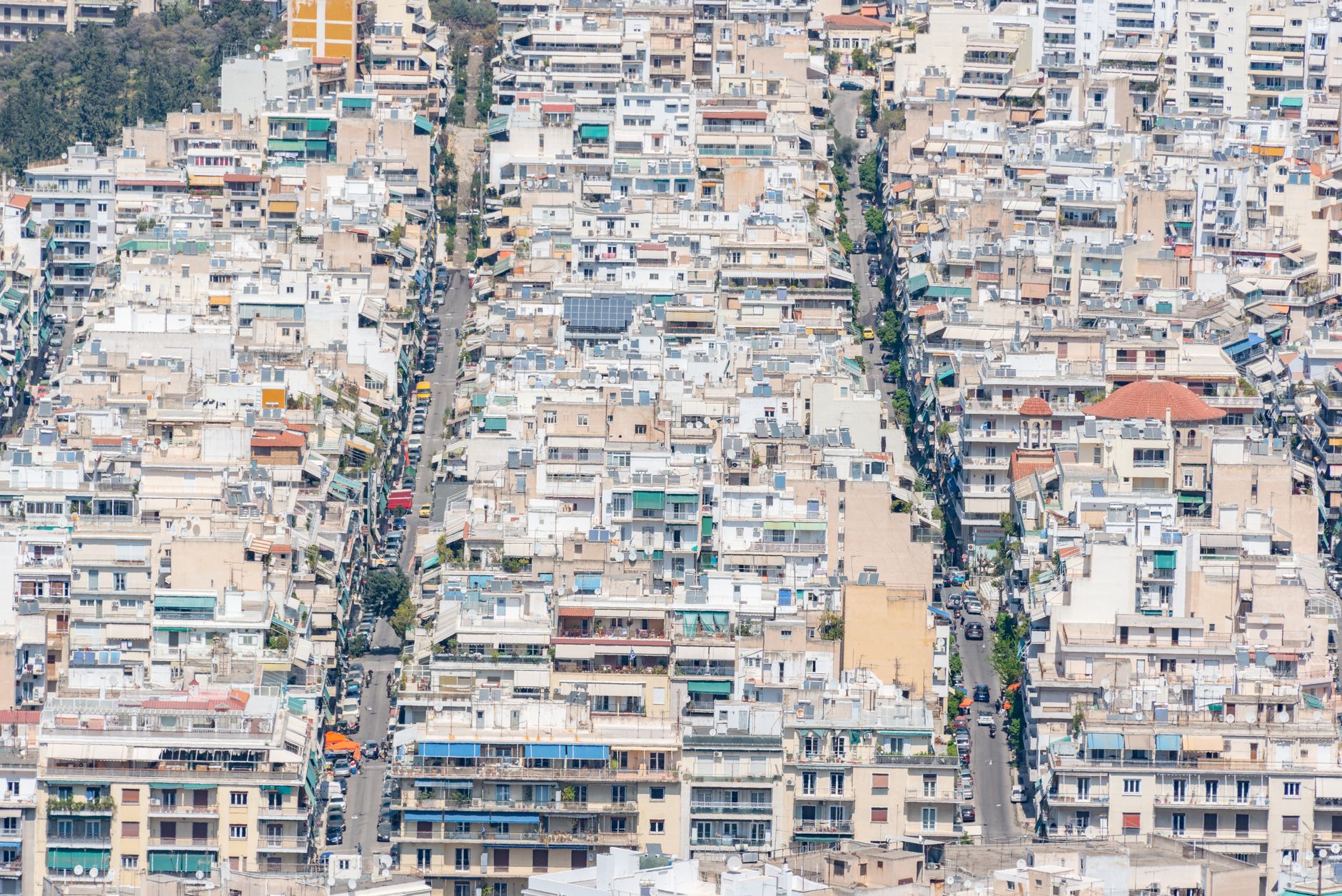
Lycabettus dominates Athens differently from the Acropolis. It doesn't carry the same symbolic weight, but offers a precious key to understanding the city's geography. From its summit, your gaze embraces urban fabric, the sea in distance, historic hills, and the sprawl of modern buildings. It's one of those points where Athens appears as it is: a dense, irregular Mediterranean capital, grown rapidly, yet still organized around elevations that orient its life. Myth links it to Athena, who dropped the rock; geology, naturally, tells another story. Many visitors head straight for the viewpoint, but Lycabettus offers more walked slowly along less-frequented trails. Among pines, pale rocks, and sudden curves, you encounter Athenians climbing to walk, run, get air after work. The contrast with streets below is stark: minutes separate horns and storefronts from an almost suspended landscape. It's not wild, doesn't pretend to be. Rather, it's an urban reserve, a physical reminder that Athens isn't just plazas and ruins, but also heights, shade, exertion, and perspective. Atop it, a small white chapel dedicated to Saint George adds another layer to the mountain's story. Its presence surprises those arriving expecting only panorama: suddenly the highest point becomes also a place of devotion, weddings, silent visits, simple gestures. No need for exaggerated mysteries to feel its appeal. Lycabettus' true enigma is how it holds together pagan myth, Orthodox piety, local habit, and tourism. At sunset it crowds, yes, but remains one of those places where Athens reveals itself without needing lengthy explanations.
When Cuisine Tells Stories
Athenian cuisine is often reduced to a few known dishes, but the city holds more complex tradition because it's been crossed by migrations, trade, poverty, religious feasts, and street habits. Food here tells daily life before national identity. A koulouri bought on the go, salty pita eaten standing up, Greek coffee sipped without hurry say much about Athenians' relationship with time. These aren't rare experiences, but precisely that makes them revealing. Athens doesn't rigidly separate lunch, strolling, and conversation: it often mixes them. The most interesting street food isn't necessarily what's unavailable elsewhere, but what assumes particular rhythm in Athens. Souvlaki, gyros, tyropita, spanakopita, and loukoumades belong to widespread repertoire, yet change tone by neighborhood, hour, clientele type. After work, after theater, late night, or during a quick break, they become small urban rituals. The influence of Greek refugees from Asia Minor left decisive traces too: spices, preparations, ways of understanding mezze and conviviality enriched the modern Athenian table. Among ingredients, many speak of Greece less like a postcard. Wild greens, often simply boiled and dressed, recall eating tied to countryside and seasons. Legumes, preserved fish, olives, cheeses, honey, and yogurt compose cuisine born not to amaze but to endure. Even Orthodox fasting periods influenced meatless and dairy-free dishes, making vegetable preparations familiar long before they became fashionable. To understand Athens at table, ask not just what's eaten, but when, with whom, and why.
Rites and Traditions: Athens for Locals
Many Athenian traditions escape tourists because they aren't organized as performances. They happen in neighborhoods, churches, courtyards, repeated gestures. Patron saint festivals, often called panigeria, are moments where religious dimension intertwines with social: you enter church, light a candle, greet someone unseen for time, eat or listen to music. They aren't always big events; sometimes crowded streets suffice, small stands, unusual foot traffic. The hidden meaning is precisely this: community recognizes itself without declaring it. Another key to reading Athens is the importance of name days. In Greece, for many, their saint's day matters as much or more than birthdays. Calls, visits, greetings, and shared desserts create relationship networks that can surprise those from countries with different habits. Orthodox Easter also deeply marks the city, with evening rites, candles, family returns, and changing atmosphere neighborhood by neighborhood. It's not merely religious celebration: it's emotional calendar, measuring the year and reaffirming belonging. Then there are more secular, almost invisible rituals. Evening strolls, prolonged coffee, conversation at kiosks, balconies used as outdoor rooms, shopping in neighborhood markets. In less-traveled areas, these gestures tell of a city resisting rush. Athenians might argue passionately about politics or football, yet also maintain constant care for bonds of proximity. Speaking of secret rituals would be excessive; better calling them protected habits. They're in plain sight, but become visible only when you stop moving through the city as a list of attractions.
Street Art as Historical Narrative
Athens is among European cities where street art reads with greatest intensity. Not because every wall's a masterpiece, but because many walls speak. Political writings, stencils, murals, torn posters, and temporary interventions tell of economic crises, protests, griefs, hopes, rage, and memory. Neighborhoods like Exarchia, Psyrri, Metaxourgeio, and Gazi have different languages, yet share the idea that public space is for discussion. For those arriving expecting only ancient columns, this contemporary surface can be jarring. It's actually essential to the real city. Some murals address historical and social themes directly: migration, inequality, identity, repression, solidarity. Others are more poetic or ironic, yet still spring from specific urban context. Athens' recent memory isn't only in museums; it deposits also on walls, often provisionally. A work can be covered, modified, erased. This precariousness doesn't diminish significance. Instead, it reminds that modern city is made of open conflicts, not concluded narratives. Watching Athenian street art means accepting history still in progress. Local artists helped change how many visitors perceive Athens. No longer just ancient capital, but visual laboratory of contemporary Mediterranean. Some interventions are commissioned and placed in cultural projects, others emerge spontaneously or militantly. The difference shows, but both forms tell something: on one hand, attempts to value neighborhoods in transition; on the other, necessity to have a voice. The advice is simple: don't just photograph the most visible mural. Observe context, surrounding writings, the building, the street. Often the message lies in relationships between all these elements.
Anecdotes from Athenians: Urban Legends
Every ancient city produces urban legends, and Athens has many. Some concern underground galleries, hidden passages between monuments, forgotten shelters, ancient watercourses still flowing beneath streets. Not all are verifiable, and often they mix with real facts: metro excavations truly uncovered important finds, and beneath the city exist infrastructure traces, tombs, conduits, foundations. From here emerges popular imagination. The idea of a second Athens beneath the visible one is powerful because it contains symbolic truth: here the past never fully submits to control. Stories passed generation to generation also speak of a rapidly changed city. Elders remember neighborhoods with low houses, courtyards, neighborhood shops, summers without widespread air-conditioning, open-air cinemas as normal dates, less congested streets. These accounts shouldn't be taken as pure nostalgia: they often include hardships, poverty, internal migration, sometimes unfortunate urban transformations. Yet they help explain why many Athenians hold ambivalent relationships with their city. They love it, criticize it, tolerate it, defend it. In their words, Athens is never simple. Among recurring anecdotes are those tied to small urban signs: bitter oranges perfuming some streets but not meant to eat as table fruit, cats seeming to know routes between ruins and tavernas better than tourists, old shops resisting alongside new venues. Neighborhood elders often tell not grand events but details: who lived in a house, which bakery was frequented, where processions passed. These are micro-stories. Yet together they form a parallel guide, perhaps hardest to buy and most valuable to hear.
FAQ
What are some interesting facts about Athens?
Athens is the birthplace of democracy, but the city also holds extraordinary stories and legends not commonly found in tourist guides.
What makes Athens unique compared to other European cities?
Athens blends ancient mythology with vibrant modern culture, making it a unique fusion of tradition and innovation.
What are Athens' lesser-known places?
There are wonders like Plaka's alleys and Lycabettus Mountain that offer a more authentic experience.
What are the most surprising traditions in Athens?
Each Athenian neighborhood can surprise you with unique rituals and local festivals that reveal the city's true essence.
The guide to this city: Atene
Digital guide to Atene: what to see, where to eat, live maps and tips. Read it like an app, even offline.
Explore · € 4,99 →