What Hamburg's Monuments Tell Us
A Journey Through Time via Monuments
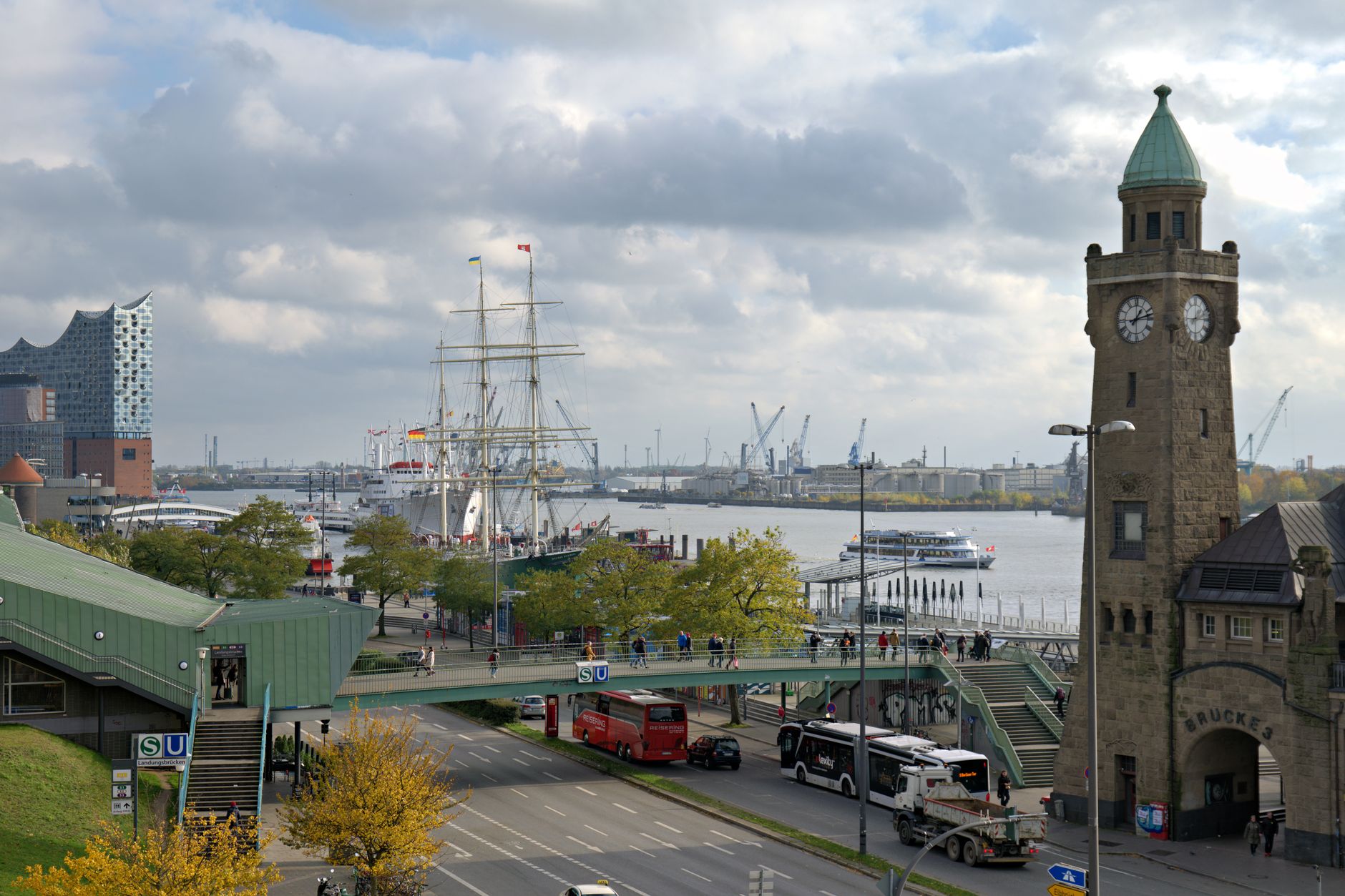
Hamburg's monuments are more than dots on a map. They're traces of a city that built its identity on water, maritime trade, and strong civic autonomy. Many important buildings tell the same story: how to preserve memory while adapting to new urban purposes. Visitors notice this quickly. The Town Hall speaks the language of political representation, the Speicherstadt that of labor and commerce, St. Michael's Church that of faith and rebuilding. The Elbphilharmonie, meanwhile, shows the desire to rewrite the harbor front with a contemporary, instantly recognizable mark. Hamburg was wounded by fires, wars, and economic upheaval, but rarely chose to freeze in the past. Its monuments are often buildings that survived, were rebuilt, or reinterpreted. This means visiting them isn't about seeking an unchanging city, but following a story of interruptions, fresh starts, and intelligent compromises.
Rathaus: The Political and Historical Heart
Hamburg's Rathaus (Town Hall) is one of the city's clearest statements about itself. Standing in the urban center, it still houses civic institutions. It's not merely decorative backdrop—it's a living political building, tied to Hamburg's tradition as a free and mercantile city. Its solemn, detail-rich architecture reflects a merchant class wanting to express stability, autonomy, and prestige. After devastation marked the center in the 19th century, building a new Town Hall was also an act of faith. The façade doesn't hide this ambition. Entering or simply stopping at the plaza helps you grasp the relationship between monument and public life. Here pass rallies, ceremonies, tourists, office workers, citizens. The Rathaus reveals a Hamburg that doesn't fully separate commerce, government, and civic pride—it puts them together in the same space, with order and awareness.
St. Michael's Church: A Symbol of Resilience
St. Michael's Church, often called Michel, is one of Hamburg's most recognizable symbols. Its tower was for generations a landmark for those arriving by river and for city navigation. The church strikes not just through visual presence, but through troubled history. St. Michael's was repeatedly damaged and rebuilt—fires, collapses, wartime destruction. This sequence of loss and return transformed it into a monument to civic resilience. It's not merely a place of worship; it's testimony to how Hamburg has rebuilt without erasing the symbolic value of places. Climbing the tower, when possible, adds another reading level. From above, you grasp the city's layout: the port, canals, center, expanding neighborhoods. The view isn't just postcard scenery—it shows the real relationship between faith, navigation, commerce, and urban orientation.
Elbphilharmonie: Merging Art and Modernity
The Elbphilharmonie is the contemporary monument that most transformed Hamburg's recent image. Built atop an old port warehouse, it unites industrial memory with cultural architecture. The brick base echoes the port's past; the upper glass section introduces a new, immediately recognizable form. Its design and construction sparked discussions, anticipation, and criticism—as large public projects often do. Today, the building is a major urban landmark. You don't need to be a classical music fan to grasp its role: the Elbphilharmonie reshaped how Hamburg views its waterfront. Inside and in its public spaces, concerts, visits, strolls, and architectural curiosity intersect. It's a monument celebrating not a past victory, but present transformation. It tells of a city using culture to reimagine port areas, attract audiences, and shape an international image.
Speicherstadt: A UNESCO World Heritage Site
Speicherstadt is one of Hamburg's most eloquent places. This brick warehouse district, threaded with canals and bridges, arose to serve international trade. Here precious goods were stored—coffee, spices, carpets, and other products arriving through the port. The architecture, often described as brick neo-Gothic, is far more than aesthetic. Tall facades, pulleys, water and street access answered practical needs. Speicherstadt's beauty stems from meeting functionality with formal care. This explains why UNESCO recognition feels coherent with its historical importance. Today many warehouses host museums, offices, galleries, and cultural attractions. The quarter no longer functions as a traditional customs depot, but continues revealing the hidden labor behind Hamburg's prosperity. Walking it at dawn or dusk lets you catch shadows, reflections, and details that explain more than dates ever could.
Kunsthalle: A Journey Through Art Across Centuries
Hamburg's Kunsthalle is a cultural monument before it's an architectural one. Its collections traverse centuries of European art, showing how a mercantile city also invested in visual literacy. It's not isolated from urban history—it's part of the bourgeois vision of education, collecting, and public space. Among works you shouldn't miss are great chapters of painting, from the Middle Ages through modern and contemporary periods. German Romantic artists feature prominently, dialoguing with landscapes, interiority, and northern visions. Yet the museum transcends a single artistic period. Temporary exhibitions keep the Kunsthalle in constant motion. This matters: a historical museum shouldn't just preserve but can reframe its narratives. In Hamburg, art becomes another way to read the relationship between city, memory, Europe, and modernity.
Commercial History's Impact on Monuments
Understanding Hamburg's monuments means starting with commerce. The city grew as a major port and trading hub, and this calling influenced not just economics but buildings themselves. Many monuments speak of goods, insurance, banks, guilds, shipping routes, and contractual trust. Speicherstadt is the clearest example, but not the only one. The Town Hall also reflects the power of a city governed by civic elites tied to trade. The institutional facades, representative halls, central squares, and historic commercial buildings reveal a world where prestige came from organizing traffic and rules. This commercial past shouldn't be seen only as accumulated wealth. It also tells of labor, inequality, migration, port work, and global connections. Hamburg's most interesting monuments are those revealing both dimensions: public pride and the material complexity that made it possible.
Comparing Historic and Modern Monuments
Hamburg offers a striking contrast between historic and modern monuments. On one side are churches, warehouses, and civic palaces using solid materials, recognizable proportions, and language tied to continuity. On the other are contemporary structures emphasizing transparency, bold forms, and new uses of public space. The difference isn't only stylistic. The Town Hall and St. Michael's were built to represent stable institutions—civic government and religious community. The Elbphilharmonie represents a city promoting itself through culture, design, and urban regeneration. Yet all three need to be recognized by residents to truly become monuments. The most interesting similarity is their relationship with water and the port. Even when not directly on the river, these buildings belong to a city shaped by trade. Past and present don't starkly oppose—they often overlap, as in the Elbphilharmonie built atop a pre-existing port base.
Monuments and Local Culture
Hamburg's monuments don't exist only in guidebooks. They enter daily life, commute routes, weekend walks, festivals, concerts, and casually snapped photographs. The Michel, the Rathaus, or Speicherstadt are practical landmarks, but also elements of shared vocabulary. This familiarity changes how you experience them. They're not places to rush through, but spaces to observe the city's behavior. The Town Hall plaza might be formal one moment, lively the next. Speicherstadt might seem quiet, then fill with groups, students, workers, and museum visitors. Local culture emerges in Hamburg's restrained approach to its symbols too. There's pride, but rarely ostentation. The monuments remind us that the city was built by institutions, merchants, religious communities, artists, and workers. This plurality is key to understanding its character.
Historic Events at Hamburg's Monuments
Many of Hamburg's monuments are linked to events that shaped the city. The great 19th-century fire dramatically transformed the center and influenced subsequent urban rebuilding, including the Town Hall's story. 20th-century wars heavily struck buildings and neighborhoods, leaving scars both visible and carefully mended. St. Michael's Church powerfully exemplifies this layered history. Its reconstructions tell of calamities, collective decisions, and need for symbolic continuity. Even when a building is restored, it never simply returns to its original state—it carries traces of the eras that damaged and reimagined it. Speicherstadt, meanwhile, recalls events tied to commercial expansion and the city's customs transformations. The shift from economic infrastructure to cultural heritage is itself a long-duration historical event. Hamburg learned to recognize monumental value in places born for work, not celebration.
Stories and Legends Within Hamburg's Monuments
Alongside documented history, Hamburg preserves folk tales and figures who've become almost legendary. The port tradition spawned stories of sailors, merchants, smugglers, and adventurers. Around the port and Speicherstadt, it's easy to imagine how merchandise movement generated voices, fears, and anecdotes passed through time. A figure often linked to northern German imagination is Klaus Störtebeker, a pirate associated with the Hanseatic League and North Sea lore. Beyond legendary details, his presence in popular memory says something about Hamburg: an orderly city, certainly, but always exposed to risk, the sea, and commerce's ambiguities. Even Michel carries narrative dimension. For those arriving by ship, the tower wasn't mere architecture—it was signal, navigation aid, promise of arrival. Urban legends shouldn't be taken as fact, but as tools for understanding which places captured collective imagination.
A Historic Tour of Hamburg's Monuments
Organizing a historic tour of Hamburg's monuments requires choosing your pace. Avoid the idea of seeing everything in hours. A sensible route starts at the civic center—the Town Hall and surrounding spaces—then gradually descends toward canals, where the commercial city becomes more evident. Speicherstadt deserves time, especially if visiting one of its museums or simply walking between bridges and courtyards. The transition to the Elbphilharmonie is natural: in a few mental leaps, more than geographic ones, you cross centuries of port history, from merchandise storage to culture as an urban engine. St. Michael's Church can complete the route with a different, more spiritual and panoramic perspective. The Kunsthalle deserves a dedicated visit, perhaps at another point in your day. Plan your Hamburg visit with real breaks—these monuments reveal more when observed without rush.
Architecture and Art: A Subtle Partnership in Monuments
In Hamburg's monuments, architecture and art often meet discreetly. The Town Hall uses sculpture, decoration, and representative halls to convey civic authority. St. Michael's entrusts its form, music, and interior space with emotional and communal function. The Kunsthalle makes this bond explicit through its collections. Speicherstadt shows another beauty type: that of the functional building designed with care. Bricks, arches, pediments, and repeated details weren't purely decorative—they organized an enormous commercial mechanism. Here art emerges from building precision and ensemble coherence. The Elbphilharmonie advances the conversation into the present. It's simultaneously concert hall, urban space, and architectural image. Through its monuments, Hamburg demonstrates that art doesn't live only in museums—it can inhabit a tower, warehouse, plaza, or harbor façade, transforming the visit into complete cultural experience.
FAQ
What is Hamburg's most famous monument?
The Rathaus (Town Hall) is one of Hamburg's most iconic and representative monuments, embodying the city's civic pride and mercantile heritage.
Which Hamburg monuments offer guided tours?
The Town Hall and St. Michael's Church offer guided tours that deepen historical and cultural understanding of these landmark locations.
What's the history behind St. Michael's Church in Hamburg?
St. Michael's Church, rebuilt multiple times after fires and wars, symbolizes the city's resilience and represents an important chapter in Hamburg's religious and architectural heritage.
The guide to this city: Amburgo
Digital guide to Amburgo: what to see, where to eat, live maps and tips. Read it like an app, even offline.
Explore · € 4,99 →