Athens souvlaki: a journey through the history of an iconic dish
Introduction to souvlaki: symbol of Athenian cuisine
Souvlaki in Athens has a rare quality: everyone recognizes it, but it doesn't belong to just one type of restaurant or clientele. Students, office workers, families, taxi drivers, arriving travelers, and Athenians who don't feel like cooking all eat it. It can be a skewer served on a plate, a pita wrapped in paper, a quick meal, or a small complete dinner. Its strength lies in this very flexibility. In a city where rhythms change dramatically between morning, afternoon, and night, souvlaki occupies different spaces. At lunch it's practical, in the evening it becomes social, after a concert or night out it's almost an automatic stop. It needs no complicated explanation: grilled meat, bread, toppings, hands. Yet behind this apparent simplicity lies precise language made of personal preferences and local habits. For many visitors, their first Athenian souvlaki coincides with an immediate discovery: it's not a "folkloric" dish created for tourism, but living food. You can feel the difference in how it's ordered, prepared, and consumed. Those who know it well realize that the temperature of the pita, the balance between meat and sauce, the freshness of tomatoes, and the aroma from the grill all matter. Small details, but decisive ones.
Ancient roots: how souvlaki was born
Discussing souvlaki's origins requires care: modern souvlaki shouldn't be confused with preparations from antiquity. However, the idea of cooking small pieces of meat threaded on a spit is very ancient in the Greek and Mediterranean world. Texts, artifacts, and iconography show how widespread grilling was, especially in domestic, ritual, and communal settings. The Greek word linked to the spit evokes simple tools used to roast meat over live fire. In ancient times, meat wasn't a daily food for everyone: it could be tied to celebrations, sacrifices, feasts, or special occasions. For this very reason, grilling over coals also had social value. It brought people together around the fire and transformed a precious ingredient into a shared moment. Today's Athenian souvlaki stems from long continuity of gestures rather than an unchanging recipe. Threading, roasting, salting, eating with bread or other accompaniments: these are elementary actions that span centuries and regions. Athens, with its role as a crossroads city and modern capital, gathered these practices and transformed them into an urban, quick, and recognizable form.
Evolution over time: from popular dish to gastronomy icon
In the shift from rural to urban Greece, souvlaki changed scale. From a preparation tied to domestic grills or taverna cooking, it became street food capable of keeping pace with the city's growth. Athens, especially with neighborhood expansion and increased dining outside the home, needed economical, hearty, and easy-to-eat meals. Souvlaki answered perfectly to this need. Its evolution was also technical. The availability of more efficient grills, service counters, takeout systems, and regularly produced pita made the dish faster without erasing its identity. The pita-wrapped format became particularly suited to urban life: one hand was enough, the paper held the heat, ingredients stayed together. It's practical architecture, born from use. Over time, souvlaki also entered the culinary narrative of contemporary Greece. It didn't lose its popular character but gained visibility. Today it can be presented more carefully, with selected meats or creative variations, yet its credibility remains tied to simplicity. If it becomes too constructed, it loses something. The best Athenian souvlaki continues to speak a direct language.
Traditional souvlaki ingredients
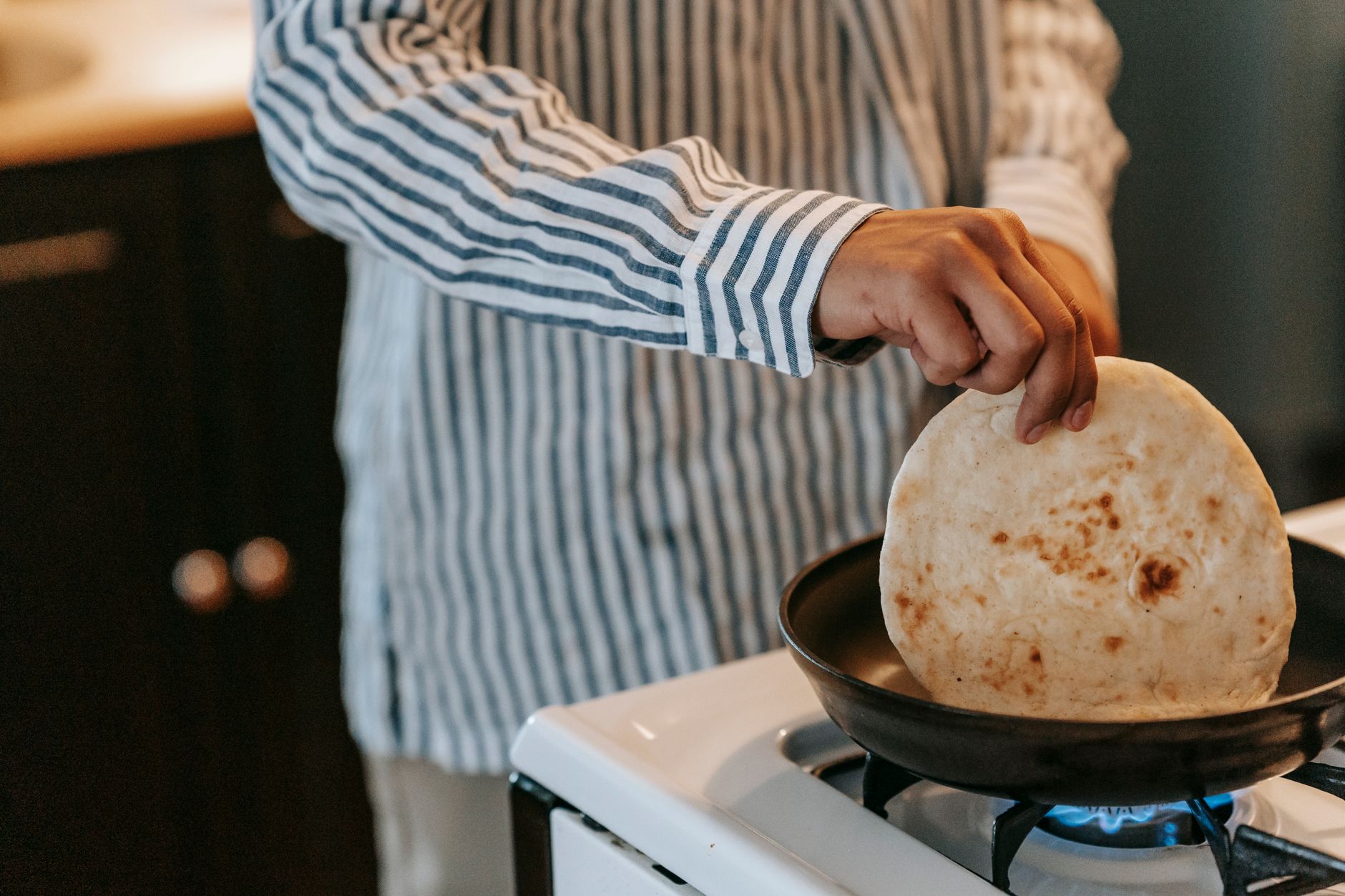
Meat and spices — The foundation of traditional souvlaki is meat cut into small, even pieces. Pork is very common, but you'll also find chicken, lamb, or other choices depending on the restaurant and customer preferences. Marinades, when used, tend to be restrained: olive oil, lemon, oregano, salt, pepper, sometimes garlic or paprika. The purpose isn't to mask but to support the grilled meat's flavor. The role of pita — Athenian pita isn't merely a container. It must be hot, soft but not mushy, able to fold without tearing. Often it's warmed on a griddle or lightly oiled to gain aroma and structure. When wrapped, pita holds meat, vegetables, and sauce together; on a plate, it accompanies and catches the juices. It's an active part of the dish. Traditional toppings and sauces — Tomato, onion, and a yogurt sauce like tzatziki are frequent fixtures, though not mandatory in every version. French fries inside the pita are loved by many and debated by others, but they're now part of the most common Athenian experience. The key is balance: too much sauce weighs it down, too little vegetable dries it out, aggressive onion dominates. A good souvlaki rests on careful proportions.
Souvlaki and its regional variations across Greece
Souvlaki isn't identical throughout Greece. The bread, meat, toppings, and even how the word is used varies. In some areas the term mainly indicates the skewer, elsewhere it immediately suggests wrapped pita. This might surprise travelers moving between cities, but it's one of the dish's most interesting features: a common base with many local interpretations. In northern Greece and some urban areas you'll find different customs regarding sauces, spices, and portion sizes. In some island regions, grilled meat tradition coexists more strongly with local seafood, legumes, and produce. Souvlaki remains present but adapts to context. It's not a fixed block; it's a repertoire. Athens, as capital and arrival point for people from across the country, has absorbed many regional influences. That's why in the same neighborhood you can find simpler souvlaki, versions with richly-loaded pita, plate-served skewers, and more modern interpretations. The city doesn't represent just one Greek food story: it often places many side by side, leaving the choice to you.
Preparation methods: from grill to table
Souvlaki preparation starts before cooking. The meat must be cut regularly enough for even cooking but not so small it dries out in minutes. Marinades, if used, require balance: lemon brings freshness, oil protects, aromatic herbs add aroma. In more attentive restaurants, meat isn't treated as an anonymous element but as the dish's heart. The grill is the decisive step. Heat should be strong but controlled, because souvlaki thrives on the contrast between charred surface and juicy interior. Careless cooking produces tough meat; timid cooking fails to develop the grilled character. Those working the grill know times, distances, and rotations, often without special tools. It's craft, not just recipe. Then comes assembly, which in Athens is almost a small choreography. The pita is heated, meat is positioned, vegetables distributed, sauce added with measure. Paper wraps it all leaving the top open. When souvlaki reaches your hand, it should be hot and compact but not crushed. It's judged at the first bite, but also the last: if it stays balanced throughout, it's made well.
Cultural influences on Athenian souvlaki
Athens has always been a city traversed by movements of people, goods, and habits. Modern souvlaki reflects this broad history of the eastern Mediterranean, where flatbread, grilled meat, yogurt, spices, and fresh vegetables appear in many traditions. This doesn't mean souvlaki copies other dishes, but rather belongs to a shared gastronomic family made of contacts and adaptations. Throughout the twentieth century, internal migrations and exchanges with other areas of the Greek world influenced Athenian cuisine. Tavernas, markets, and small restaurants absorbed different tastes, from how to season meat to which sauces to use. Daily life also played a role: an expanding capital requires quick, portable, accessible food. Souvlaki succeeded without losing its connection to the grill. Cultural influences show especially in details. A more spiced sauce, thinner pita, chicken preference, a vegetarian version for contemporary customers: each choice tells something about the city. Athens doesn't preserve souvlaki under glass. It uses it, modifies it, tests it. This very ability to remain quotidian keeps it authentic.
Historic Athens restaurants celebrating souvlaki
Iconic tavernas — Historic souvlaki restaurants in Athens don't all look the same. Some are simple shops with few tables, others are neighborhood tavernas where the grill has worked for decades, still others are central spaces that became landmarks for generations of customers. Beyond decor, continuity matters: recognizable recipes, staff used to service rhythm, customers returning from habit and trust. In these places souvlaki isn't presented as something new. It's part of city routine, often tied to repeated actions: ordering at the counter, watching the grill while waiting, debating whether to add onion or sauce, sitting a few minutes or taking it away. History appears in practical details. A restaurant serving well for years becomes an informal archive of Athenian life. Market areas as souvlaki waypoints — Around market zones and commercial streets, souvlaki finds natural ground. Where workers, shoppers, and residents pass through, hot and quick food always serves a clear function. Areas near markets tell the bond between raw ingredient and immediate consumption well: meat, bread, vegetables, and herbs aren't abstract concepts but products entering the city's circulation daily.
Souvlaki today: tourism impact and modernization
Tourism has made souvlaki one of the first culinary contacts with Athens. For many travelers it's the easiest dish to order, photograph, and remember. This visibility brought benefits: more attention, greater availability, restaurants better explaining ingredients and variations. But it also created simplified versions aimed at generic taste, where quantity beats balance. Modernization introduced new demands. Some places offer different meats, whole grain pita, meat-free options, lighter sauces, or more polished presentations. This isn't necessarily betrayal: living tradition changes with those eating it. Problems arise when contemporary form erases the dish's meaning, turning it into standard product without grill connection, neighborhood identity, or service character. To navigate, observe more than follow trends. A place frequented by Athenians too, an active grill, ingredients turning over quickly, a not-infinite menu: these are useful signals. Touristy souvlaki isn't always bad and traditional souvlaki isn't automatically better. Care makes the difference. Athens offers both paths, often steps apart.
Where to find authentic souvlaki in Athens
Finding authentic souvlaki in Athens doesn't mean chasing a secret address. It means learning to read the city. In central neighborhoods you'll find it everywhere, but it's worth moving beyond the busiest streets and observing where residents eat. Busy thoroughfares are useful, but inhabited neighborhoods tell better the daily use of the dish, away from postcard logic alone. A good criterion is watching the restaurant's rhythm. If meat is cooked continuously, pita is heated fresh, and ingredients appear fresh, you're starting well. Aroma helps too: the grill should be present, not masked by heavy sauces or invasive fried smells. Simply asking what they recommend can open brief but valuable conversations, especially in neighborhood places. Authenticity, though, shouldn't become rigid proof. For Athenians each person has their ideal souvlaki: with or without onion, extra tzatziki, fries inside, skewer only, or on a plate. The best choice is tasting several, at different times of day. This reveals souvlaki isn't a single flavor but a personal small map of the city.
Traditional Athenian souvlaki recipe
Step-by-step ingredients — Preparing Athenian-style souvlaki at home requires few carefully chosen elements: grill-suitable meat, soft pita, olive oil, lemon, oregano, salt, pepper, ripe tomatoes, onion, and a yogurt sauce like tzatziki. Cut meat into even pieces and let it absorb the flavors of oil, lemon, and herbs. Don't use aggressive marinades: the result should stay clean. After resting, meat pieces thread onto skewers and cook on a hot grill, griddle, or barbecue. Heat the pita separately to make it flexible and fragrant. Then compose the souvlaki: pita, meat, tomato, onion, sauce, and if following the most common Athens habit, a few French fries. The important thing is not to overload it. Tips for perfect cooking — The secret is avoiding dry meat. Better to use less-lean cuts, decisive heat, and controlled timing. Turning often helps distribute cooking, but don't press the meat on the grill. Salt can be adjusted at the end, with a squeeze of lemon. Serving immediately is essential: souvlaki loses character when it cools and pita absorbs too much moisture.
Conclusion: souvlaki as cultural experience
Souvlaki tells Athens because it joins practicality and memory. It needs no elevation to have value: its place is in real life, between work, walks, evenings, waits, and meetings. It's food eaten with hands, often standing, yet carrying a long history made of charred meat, bread, herbs, and sharing. Visitors to Athens can use it as a simple reading key. Ordering souvlaki means entering the local rhythm for a few minutes, watching how people choose, wait, eat, comment. It's not just an economical or quick break. It's a way to understand Athenians' relationship with taste: direct, social, focused on substance over presentation. Discover authentic souvlaki directly in Athens: a culinary journey awaits you. Taste it downtown and in neighborhoods, in a taverna with the grill fired up or a small shop filled with residents. Each pita might seem like the last, but little reveals differences, preferences, and stories. That's where the dish stops being an icon and becomes experience.
FAQ
What is the history of souvlaki?
Souvlaki has ancient roots in Greece and is a symbol of Athenian street food culture.
Where can I taste the best souvlaki in Athens?
The Monastiraki and Plaka neighborhoods are home to some of the city's most celebrated tavernas.
What are the main ingredients in souvlaki?
Meat (often pork or chicken), pita, toppings, and sauces such as tzatziki.

The guide to this city: Atene
Digital guide to Atene: what to see, where to eat, live maps and tips. Read it like an app, even offline.
Explore · € 4,99 →